Calgary's Energy Sector Maintains Role as Economic Foundation
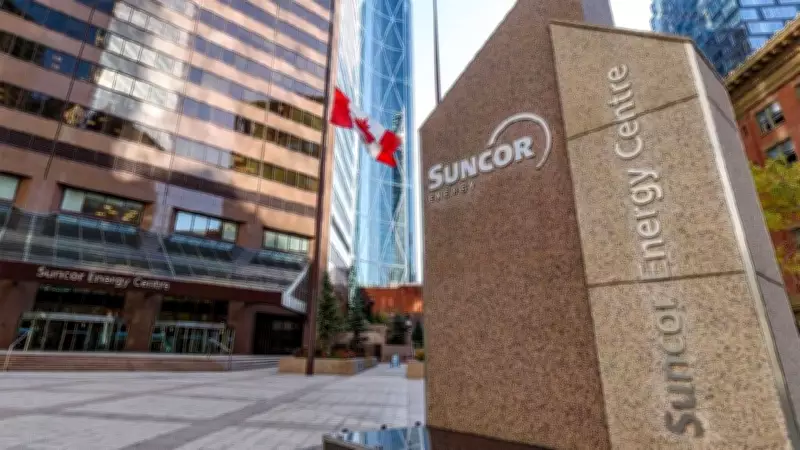
Calgary's iconic Suncor Energy Centre, once known as Red Square and originally the Petro-Canada Centre, stands as a testament to the city's deep-rooted connection to the energy industry. The $200-million complex, completed in 1984 with its 53-storey west tower becoming Calgary's tallest structure at the time, is undergoing a significant $90-million revitalization project that signals renewed confidence in the sector's future.
Long-Term Commitment to Downtown Revitalization
Brookfield Properties and ARCI Investments announced the ambitious renovation plans in December 2024, attracting new tenants including energy infrastructure company Keyera and ATB Financial alongside existing anchor tenant Suncor. "We made a commitment, a major financial commitment, repositioning the asset and believing that for the next 40 to 50 years, this will position us to be best in class," says ARCI president Hannes Kovac.
The renovation project includes:

- A performing arts amphitheatre
- A large food court and indoor garden
- An exterior dining terrace
- A new fitness facility and conference centre
Kovac emphasizes that companies signing 10- and 20-year leases demonstrate "a commitment by the energy companies to Calgary as a city."
Energy Sector Expansion and Economic Impact
As Calgary approaches a population of two million people, possibly by the end of this decade, business leaders remain confident about the energy sector's continued importance to the city's $139-billion annual economy. "It's the backbone of the city," says Mac Van Wielingen, founder and partner of ARC Financial Corp. and former chair of the Business Council of Alberta.
Keyera CEO Dean Setoguchi highlights his company's expansion plans, including the largest acquisition in Keyera's history - the $5.2 billion purchase of nearly all of Plains' Canadian natural gas liquids business. This move will increase Keyera's employee count from about 700 to approximately 1,000 workers including contractors.
"When we look at our future for the next 10 to 15 plus years, there are other things now at our stage of growth that we think are important to our company and our people as well," Setoguchi notes, citing the need for central downtown offices near public transit.
Historical Context and Future Projections
The energy sector's influence on Calgary dates back to the historic Leduc oil discovery in 1947. By 1965, the city hosted 886 oil and gas related businesses, and by 1971, more than 10,000 workers were directly employed by the sector. Veteran oilman Jim Gray, co-founder of Canadian Hunter Exploration, recalls "Downtown Calgary (really) started with the discovery of Leduc, because the downtown was where the lawyers were, it's where the banks were."
Today, while the city's economy diversifies into aerospace, tech, life sciences, and other sectors, energy remains fundamental. Alberta Premier Danielle Smith aims to double total oil output to eight million barrels per day by 2035, building on current production of 4.1 million barrels per day recorded last year.
Industry Transformation and Employment Trends
The past decade brought significant changes to the sector. During the 2012 oilsands investment boom, direct employment in Calgary's oil and gas extraction and mining industries reached 63,000 jobs, representing 8.4% of the local workforce. Following the 2014 oil price crash, employment fell to 43,200 by 2017, recovering to 46,000 last year as the industry became more efficient.
Kevin Krausert, CEO of Avatar Innovations, observes "We are at a really interesting moment, where after a decade of the energy industry being squeezed to death and proving itself to the rest of the country as probably the largest strategic resource the country has, we're at a pretty unique pivot point."

Policy Developments and Investment Potential
Recent policy shifts include an energy MOU between Alberta and the federal government that designates a new bitumen pipeline to the West Coast as a priority project, dependent on the proposed $16.5-billion Pathways carbon capture network in the oilsands. Kendall Dilling, president of the Oil Sands Alliance, estimates this combined initiative could trigger $110 to $120 billion in total capital investment.
"That whole bundle, with all requisite modesty, is (a) national interest project. There's nothing that touches it in Canada, in terms of the level of investment," Dilling states.
Future Outlook and Sector Evolution
While consolidation has reduced the number of energy companies, Calgary Chamber of Commerce CEO Deborah Yedlin anticipates "a new energy cycle, in terms of growth, because we've had so many mergers, that it will generate sales of assets, and because we have other eyeballs and investors starting to look at Canada as a place to invest for energy."
ATB Financial chief economist Mark Parsons suggests the energy sector will continue anchoring Calgary's economy but may evolve: "What I don't see changing is (that) the energy sector will continue to anchor Calgary's economy, but the energy sector itself might look a little bit different." He points to diversification into downstream business, decarbonization efforts, and expansion into new markets.
As construction continues at the Suncor Energy Centre, Kovac reflects on the broader significance: "If we get major energy companies to sign long-term lease commitments in our building, that is a long-term commitment by these companies to Calgary as an energy centre for the world... And that commitment, long term, makes me feel we're in a pretty good spot."