B.C.'s Royalty Review Poses a Risk to Investment at a Key Time for Canada
By Gary Mar, Special to Financial Post
Published April 10, 2016
British Columbia's fiscal challenges are not merely the result of external economic pressures but stem from a series of policy decisions that have escalated spending while increasing reliance on resource revenues. The province's 2025 budget reveals taxpayer-supported debt nearing $100 billion, with projections indicating a potential rise to around $120 billion in the near term. Concurrently, annual deficits are expected to persist at approximately $10 billion. In this context, it is understandable for the government to scrutinize revenue streams, including royalties from oil and natural gas extraction.

The Importance of Policy Stability for Investors
However, the manner in which these policy adjustments are implemented and the signals they send to investors are critical. Provincial leaders must carefully consider the long-term implications before altering royalty policies, as such changes risk driving away investment capital—a scenario British Columbia cannot afford. The province is currently navigating the royalty framework established after the 2021 to 2022 review, with full implementation scheduled for January 1, 2027, following an extension of the transition period last year. This shift involves phasing out longstanding features like deep well credits and other cost-based deductions, replacing them with a new structure.
Challenges in Natural Gas Development
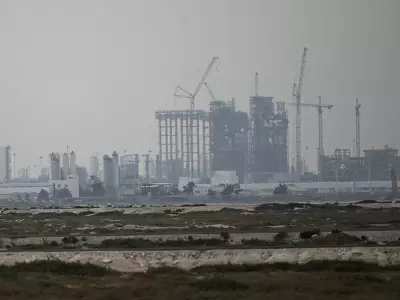
Governments have the right to reassess these systems, but natural gas development in northeastern British Columbia is not a short-term endeavor. These projects are large-scale and capital-intensive, requiring years of planning and billions in upfront investment. Companies commit such capital based on the expectation that fiscal terms will remain stable over time. When these terms are adjusted multiple times within a short period, it introduces significant uncertainty that investors cannot overlook. Capital allocation is driven by predictability and risk assessment, not loyalty; it flows to jurisdictions where conditions are clear and risks are well-understood.
Global and Domestic Perspectives on Investment
The International Energy Agency has emphasized that attracting long-term energy investment hinges on clear and stable policy and regulatory frameworks. Similarly, analysts from RBC and other Canadian institutions have noted that capital allocation in the energy sector is highly sensitive to policy certainty and jurisdictional competitiveness. This concern has been echoed in discussions convened by the Canada West Foundation with industry stakeholders focused on natural gas development.
British Columbia's Strategic Advantages
Despite these challenges, British Columbia possesses significant advantages. The Montney formation is one of the most competitive natural gas plays in North America, and the province is well-positioned to supply liquefied natural gas to growing Asian markets. With global demand for natural gas remaining resilient, this strategic advantage must be leveraged effectively. However, hiking royalties to address a self-inflicted budget deficit may undermine the stability that investment capital demands, jeopardizing these opportunities at a critical juncture for Canada's economy.