British Columbia Premier David Eby's government is finalizing a new royalty regime on gas extraction that has caused jitters in the energy industry, with major new liquefied natural gas investments hanging in the balance.
A government presentation about a month ago alarmed businesses when it appeared to show they would pay a larger royalty that would kick in at higher gas prices, according to people familiar with the matter who asked not to be identified because the discussions were private.
The updated proposals also came as a surprise, one person said, because the province has been reviewing its oil and gas royalty system for several years and companies have already made drilling plans for the next year.

New System Nears Completion
The new system is "almost complete" and due to come into effect Jan. 1, B.C.'s Ministry of Energy said in an emailed statement, without responding to specifics or sharing details. The new regime will be "simpler, more transparent, and aligned with today's market," the ministry said, adding it "aims to strike the right balance for this partnership: when industry succeeds, so does the province."
Industry Concerns and Reactions
LNG projects have been championed by Prime Minister Mark Carney, who is on a mission to diversify Canada's trading relationships away from the United States in light of President Donald Trump's tariffs and trade threats. As recently as 2023, all of Canada's gas exports went to the U.S., but a huge project known as LNG Canada started shipments to Asia last year.
Calgary Chamber of Commerce chief executive Deborah Yedlin recently wrote in a newspaper opinion article that the province's apparent "royalty grab" was putting at risk major LNG projects for which companies are now approaching final investment decisions. Follow-up conversations between B.C. government officials and energy companies have assuaged some concerns, but not all.
LNG Canada Expansion at Stake
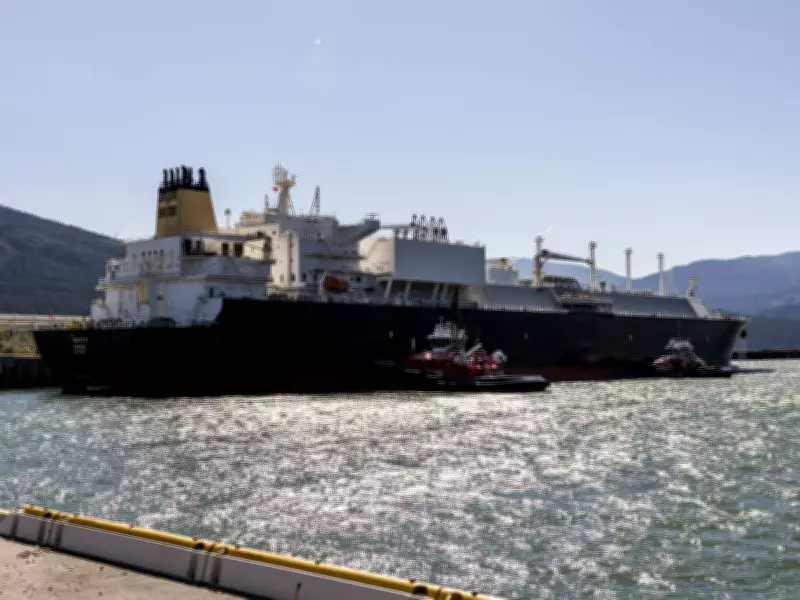
LNG Canada, which is backed by Shell PLC and other global energy majors, exports from Kitimat, B.C. The partners are currently considering whether to add a second phase that would double its capacity to about 28 million metric tons per year.
British Columbia also has abundant natural gas resources that help to feed that facility. The government relies on complex formulas to calculate the tax rate on gas produced, which vary depending on factors such as the byproducts it includes.
Potential Neutral Impact
Some price-sensitive "curves" that included proposed higher royalty takes by the government will not be used, two people said. What's more, deductions for operating and capital costs may offset a higher royalty rate, resulting in what appears to be a broadly neutral net impact, one of the people said.
The provincial government's approach to the industry has shifted over time. When Premier Eby came to power in 2022, he said B.C. couldn't expand fossil-fuel infrastructure and hit its climate goals. Now, he is celebrating the province's burgeoning LNG industry.