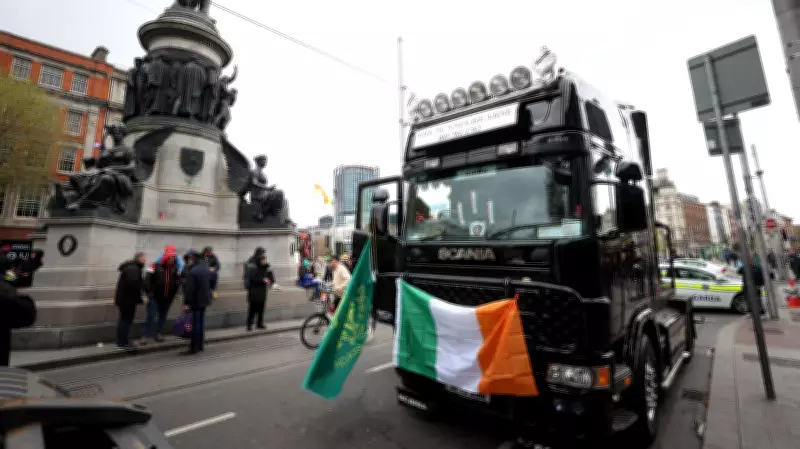
Protests against the escalating cost of fuel have caused significant disruption across Ireland, with many gas stations running dry as truck and tractor drivers continue blockades for a fifth day. The demonstrations target the country's sole fuel refinery and several key depots, intensifying the crisis.
Widespread Road Closures and Fuel Shortages
Vehicles obstructing traffic have forced the closure of the main highway encircling Dublin, along with six other major roadways. Kevin McPartlan, chief executive of Fuels for Ireland, reported that more than a third of the 1,500 service stations in the republic are out of fuel. He warned that this number is expected to increase dramatically if the roadblocks persist, potentially leading to a nationwide fuel crisis.
Government Response and Military Readiness
Irish police have placed all officers on alert for potential weekend duty, while the military is on standby to assist in removing vehicles. The government is set to renew talks on Saturday in an effort to resolve the dispute. Prime Minister Micheál Martin expressed frustration, stating that the country is on the brink of turning away tankers during a global shortage and risks losing its oil supply. He described the protests as "unconscionable, illogical, and difficult to comprehend," emphasizing that the price spike is a global issue driven by Middle East conflicts restricting oil exports.

Roots of the Protests and Demands
The protests, which began on Tuesday, have grown through social media as frustration mounts over fuel costs. Participants include truckers, farmers, and taxi and bus operators, who are calling for caps on fuel prices or reductions in excise and carbon taxes. Despite government measures introduced two weeks ago—such as temporary excise tax cuts, expanded rebates for diesel users, and aid for low-income heating—these efforts have been quickly overshadowed by rising international prices.
Escalation and Accusations
Initially, slow-moving convoys restricted access to busy Dublin streets and blocked depots supplying half the country. Some protesters have slept in their vehicles overnight, demanding direct talks with the government. Justice Minister Jim O’Callaghan suggested that outsiders may be manipulating demonstrators to advance their own agendas or damage the country.
The situation remains volatile, with the potential for further disruptions if a resolution is not reached soon, highlighting the broader economic pressures faced by Ireland amid global energy market turmoil.