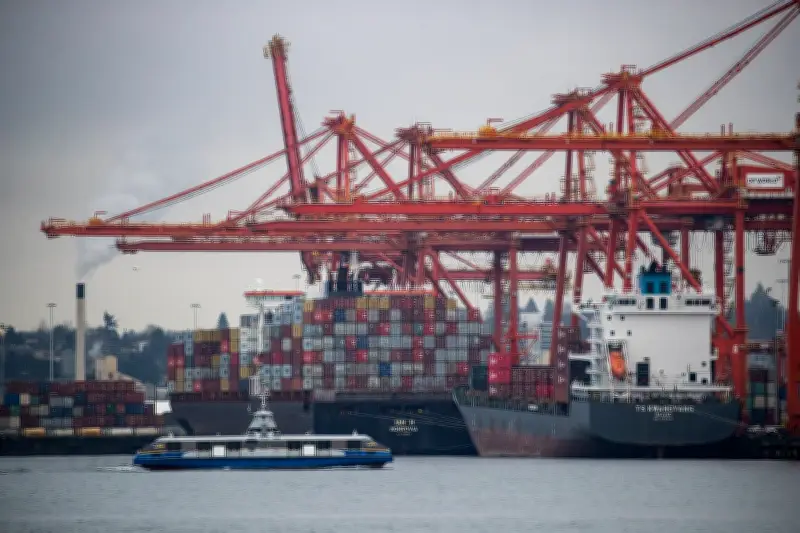
Canada's merchandise trade surplus widened to $4.2 billion in May, up from a revised $3.1 billion in April, Statistics Canada reported on Tuesday. The increase was driven by higher exports of energy products and aircraft, while imports edged up slightly.
Exports rise on energy and aircraft
Total exports rose 2.6% to $64.8 billion in May, led by a 5.1% increase in energy product exports, which reached $15.2 billion. Aircraft and other transportation equipment exports surged 12.3% to $2.5 billion, reflecting higher deliveries of commercial aircraft. Exports of metal ores and non-metallic minerals also rose 4.8% to $6.1 billion.
"The increase in exports was broad-based, with 7 of 11 product categories posting gains," the agency said in a statement. "Higher prices and volumes both contributed to the growth."

Imports edge higher
Total imports increased 0.8% to $60.6 billion in May, led by a 3.2% rise in consumer goods imports to $12.8 billion. Imports of motor vehicles and parts rose 2.1% to $10.5 billion, while imports of industrial machinery, equipment, and parts increased 1.5% to $6.3 billion.
"Import growth was modest, with 6 of 11 categories recording increases," Statistics Canada noted.
Trade surplus with U.S. narrows
Canada's merchandise trade surplus with the United States narrowed to $8.9 billion in May from $9.4 billion in April, as exports to the U.S. rose 1.8% to $44.2 billion and imports increased 3.4% to $35.3 billion. The surplus with countries other than the U.S. widened to $1.3 billion from $0.9 billion, driven by higher exports to the European Union and China.
"The trade surplus with the U.S. remains substantial, but the narrowing reflects stronger import growth from our largest trading partner," said a Statistics Canada economist.
Real GDP impact
The trade surplus in volume terms also increased, with export volumes up 1.5% and import volumes up 0.3%. The agency noted that the trade surplus contributed positively to real GDP growth in May, though final data will be released later this month.
"The stronger trade performance in May suggests that net trade will be a positive contributor to second-quarter GDP growth," said a TD Bank economist. "However, ongoing global uncertainties and supply chain disruptions could temper future gains."