

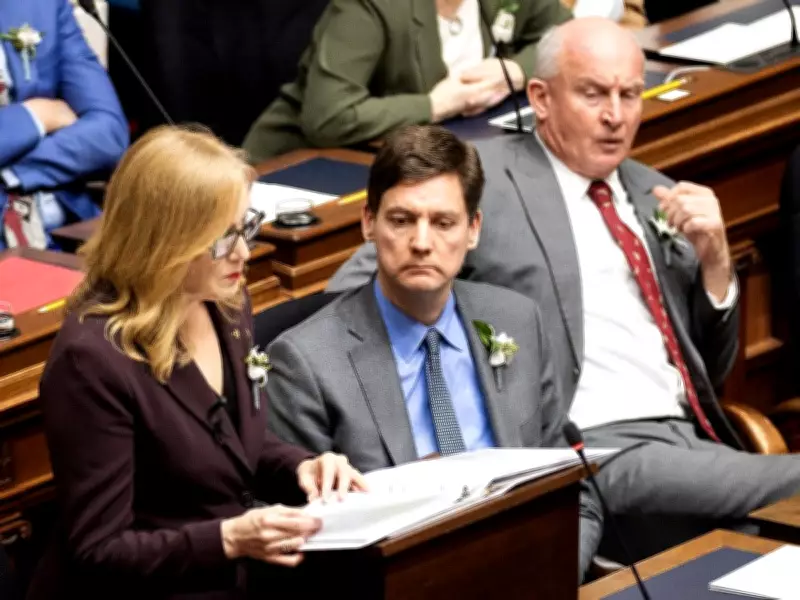
British Columbia's 2026 provincial budget has sparked significant controversy, with critics arguing it exposes a severe erosion of fiscal credibility within Premier David Eby's New Democratic Party government. Finance Minister Brenda Bailey had previously assured the public that deficits would decrease year over year, but the newly released budget documents tell a different story entirely.
Deficit Figures Paint Troubling Picture
The budget reveals a current-year deficit of $9.614 billion, which represents a record high for the province. Even more concerning is the projection for the upcoming fiscal year starting April 1, which shows the deficit ballooning to $13.303 billion—another new record that contradicts Bailey's earlier assurances of fiscal restraint.
Contradictory Fiscal Narrative
During the budget news conference, Bailey faced immediate questions about the apparent contradiction between her previous statements and the actual budget numbers. Her responses consisted largely of evasive maneuvers, pointing out that while the deficit would increase dramatically next year, it would eventually begin decreasing in subsequent years—though never returning to current levels.

The government's deficit reduction strategy appears to follow an unconventional pattern: first increasing the deficit by nearly 40 percent, then gradually reducing it over subsequent years. This approach has drawn criticism from fiscal watchdogs who question its economic logic and transparency.
Failed Austerity Expectations
In the lead-up to the budget release, expectations had been building for significant austerity measures. Bailey had told the Greater Vancouver Board of Trade that she expected to become "the least popular person in B.C." once the budget was revealed, while deputy minister to the premier Shannon Salter had described the current deficit as "unsustainable."
Despite these warnings, the 2026 budget actually increased spending by $4 billion. Staffing reductions were minimal and primarily achieved through attrition rather than strategic cuts. While some ministries received flatlined funding for multiple years, the government avoided implementing substantial reductions across the board.
Tax Increases Add Surprise Element
One unexpected element in the budget was the inclusion of $2 billion in tax increases spread over three years. This development came as a particular surprise given Bailey's statement to reporters just days before the budget release, in which she claimed to have rejected calls for tax increases.
The discrepancy between these statements and the actual budget measures has further damaged the finance minister's credibility as a reliable narrator of the province's fiscal situation. Critics argue that the government's approach represents fiscal mismanagement that contrasts sharply with the more restrained approach of previous administrations.
Political Implications and Public Trust
The budget revelations have significant implications for public trust in the Eby government's economic stewardship. The gap between pre-budget promises and actual fiscal outcomes has raised questions about the administration's commitment to responsible financial management.
As British Columbians examine the details of the 2026 budget, many are left wondering whether the government's fiscal strategy represents genuine economic planning or political maneuvering. The coming months will reveal how these budgetary decisions impact the province's economic stability and the government's political standing.






