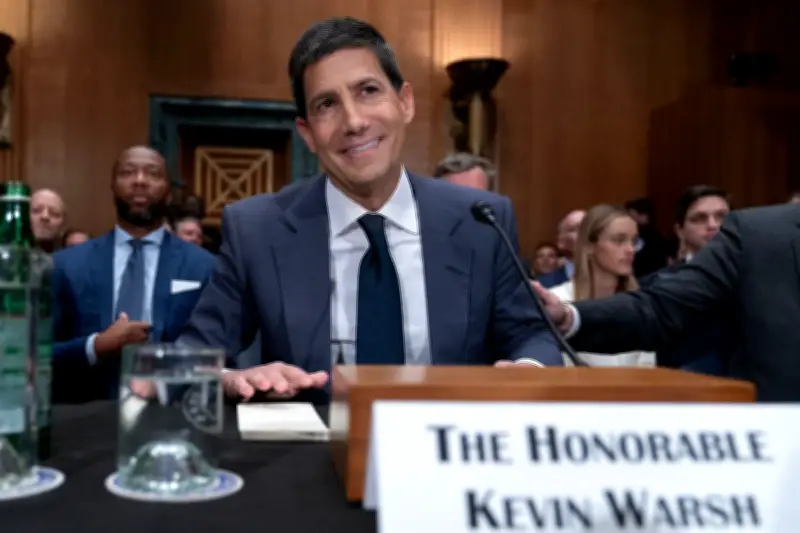
The Federal Reserve began the Warsh era by keeping U.S. interest rates on hold, while signaling that a rate hike could come later this year. The decision, announced on June 17, 2026, marks a cautious start for new Fed Chair Kevin Warsh, who took over the central bank earlier this month.
Rate Decision and Market Reaction
The Federal Open Market Committee voted unanimously to maintain the federal funds rate at its current range of 5.25% to 5.50%. In its statement, the committee noted that inflation remains above the 2% target but has shown signs of moderation. The decision was widely expected by economists and traders, with many forecasting a potential rate increase in September or December.
U.S. stock markets initially dipped on the news but recovered later in the day. The S&P 500 closed flat, while the Dow Jones Industrial Average gained 0.2%. Bond yields rose slightly, with the 10-year Treasury note yielding 4.35%.

Warsh Era Begins
Kevin Warsh, a former Fed governor and investment banker, was confirmed by the Senate in May 2026 after a contentious nomination process. He succeeds Jerome Powell, who served as Fed chair from 2018 to 2026. Warsh has indicated he will prioritize price stability and maintain the Fed's independence from political pressure.
In his first press conference as chair, Warsh emphasized that the Fed would remain data-dependent and flexible. "We are committed to bringing inflation down to 2%," Warsh said. "But we will not hesitate to adjust policy if the economy weakens."
Economic Outlook
The Fed's updated economic projections, released alongside the rate decision, show that policymakers expect GDP growth of 2.1% in 2026, down from 2.5% in 2025. The unemployment rate is forecast to rise slightly to 4.1% by year-end. Core PCE inflation, the Fed's preferred measure, is projected to fall to 2.6% by the fourth quarter.
Some economists expressed concern that the Fed's cautious stance could leave it behind the curve if inflation reaccelerates. Others argued that holding rates steady was prudent given uncertainty about the impact of trade policies and geopolitical tensions.
Global Implications
The Fed's decision has ripple effects worldwide. Central banks in Canada, Europe, and Japan are closely watching the Fed's moves as they set their own monetary policies. A stronger U.S. dollar, driven by higher interest rates, could put pressure on emerging market currencies and increase debt servicing costs for countries with dollar-denominated loans.
In Canada, the Bank of Canada is expected to hold its key interest rate steady at 4.75% in its next decision, but may adjust its guidance based on the Fed's trajectory.
Looking Ahead
Markets are now pricing in a 60% chance of a rate hike at the Fed's September meeting. The next FOMC meeting is scheduled for July 28-29, but no rate change is expected. Investors will focus on upcoming inflation data, including the June consumer price index report due next month.
The Fed's decision comes amid a backdrop of robust consumer spending and a tight labor market, with the unemployment rate at 3.9%. However, manufacturing activity has slowed, and housing starts have declined due to high mortgage rates.