

Asian Markets Retreat and Oil Prices Decline Amid Wall Street's Record Rally
Asian stock markets experienced a downturn, and oil prices fell sharply in early trading on Friday, April 17, 2026. This movement came directly after Wall Street achieved another record-setting session, fueled by growing optimism over potential ceasefire agreements in ongoing international conflicts. The contrasting performances highlight the intricate interplay between geopolitical developments and global financial markets, with investors swiftly adjusting their positions based on shifting risk appetites.
Wall Street's Surge Sets the Stage
Prior to the Asian market opening, U.S. stock indices soared to unprecedented levels. The rally was primarily driven by heightened hopes for diplomatic resolutions to several protracted conflicts, which analysts believe could stabilize global trade and reduce economic uncertainties. This surge in investor confidence on Wall Street created a ripple effect, but with a divergent outcome in Asian trading hubs.
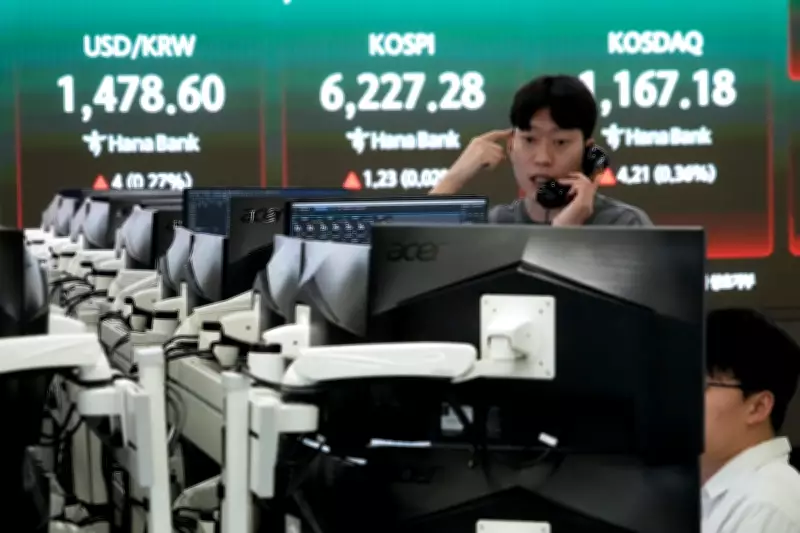
In Seoul, South Korea, traders at the foreign exchange dealing room of Hana Bank headquarters monitored screens displaying the Korea Composite Stock Price Index (KOSPI) and the U.S. dollar-South Korean won exchange rate. The KOSPI, along with other major Asian indices, trended downward, reflecting a cautious approach as markets digested the implications of reduced geopolitical tensions on commodity demands and regional economic forecasts.

Oil Prices Reflect Geopolitical Calm
Concurrently, oil prices witnessed a notable decline. The prospect of ceasefires in conflict zones alleviated concerns over supply disruptions, leading to a sell-off in crude futures. This drop underscores how sensitive energy markets are to geopolitical news, with prices often reacting swiftly to any signs of reduced volatility in oil-producing regions.
Market analysts note that while Wall Street's record highs signal optimism, the pullback in Asian equities and oil suggests a complex recalibration of global investment strategies. Investors are weighing the benefits of potential peace against the realities of adjusted economic projections and sector-specific impacts.
Broader Economic Context
The day's market movements occur within a broader context of global economic indicators and policy developments. From debates over surveillance pricing in retail to innovations in renewable energy, financial markets remain attuned to a wide array of factors influencing growth and stability.
This report synthesizes information from trading floors and economic analyses to provide a comprehensive overview of the day's financial landscape. As situations evolve, further updates will track how ceasefire developments continue to shape market dynamics across different regions and asset classes.






