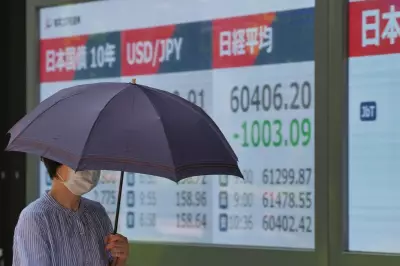
Global shares traded mixed on Tuesday, with South Korea's Kospi index plunging 3% as oil prices continued their volatile swing. The market uncertainty comes amid ongoing geopolitical tensions and concerns over global economic growth.
Market Movements
European markets opened lower, while Asian markets showed a mixed performance. Japan's Nikkei 225 edged up 0.2%, while Hong Kong's Hang Seng index fell 0.8%. The Kospi's sharp decline was driven by heavy selling in technology and energy stocks.
Oil prices remained highly volatile, with Brent crude futures fluctuating between $72 and $78 per barrel. The swings reflect ongoing supply concerns and demand uncertainty, particularly from China, the world's largest oil importer.

Investor Sentiment
Investors are closely watching central bank policies and inflation data. The Federal Reserve's recent comments on interest rates have added to the cautious mood. "The market is struggling to find direction amid conflicting signals," said a market analyst at Hana Bank in Seoul.
In Seoul, dealer rooms were busy as traders monitored screens showing red numbers. The Kospi's fall was broad-based, with losses in sectors from semiconductors to automobiles.
Global Context
The mixed trading comes after a week of gains in some markets. Wall Street ended slightly higher on Monday, but futures pointed to a lower open on Tuesday. The S&P 500 and Nasdaq are both down for the month, reflecting persistent inflation and interest rate worries.
In Europe, the STOXX 600 index was flat, with gains in healthcare offset by losses in energy and mining stocks. The FTSE 100 in London edged lower as oil price volatility weighed on BP and Shell shares.
Outlook
Analysts expect continued volatility in the near term. "Oil prices will remain a key driver of market sentiment," said an economist at Nomura. "Any escalation in geopolitical tensions could push prices higher, while a slowdown in global demand could lead to a sharp correction."
Investors are also watching the upcoming OPEC+ meeting, where producers will discuss output levels. The group has been under pressure to increase supply to cool prices, but some members are reluctant due to geopolitical risks.
Overall, the global market remains in a state of flux, with traders bracing for more swings in the days ahead.