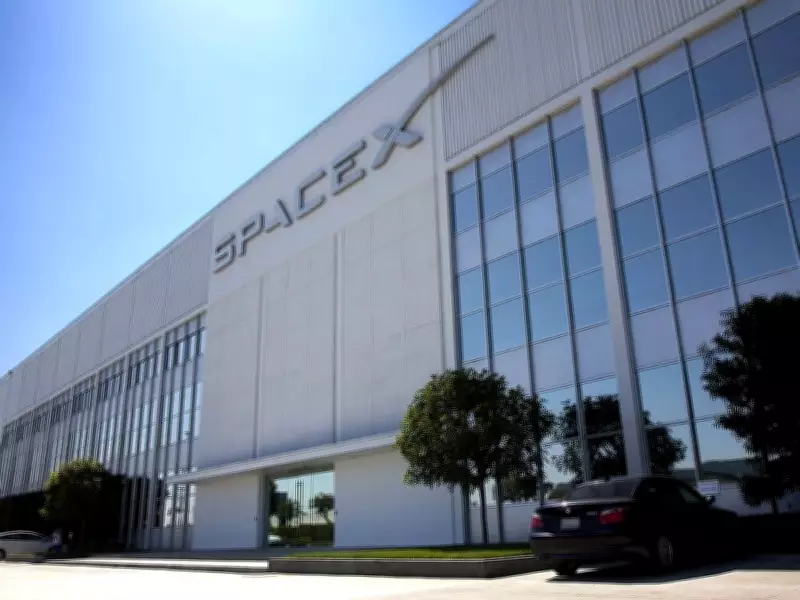
SpaceX's Lofty $1.75 Trillion IPO Target Deemed Justifiable by PitchBook Analysis
A staggering $1.75 trillion valuation for Elon Musk's Space Exploration Technologies Corp. in a potential initial public offering is "justifiable," according to a detailed analysis from PitchBook Data, Inc. This assessment comes as SpaceX prepares for a possible 2026 IPO, which could raise up to $50 billion to fund ambitious projects like the Starship rocket scale-up, Starlink expansion, and direct-to-cell service development.
Investment Horizon and Volatility Considerations
Franco Granda, a senior analyst at PitchBook, emphasized that achieving this valuation requires investors to adopt a three- to five-year investment horizon and tolerate what he describes as "Musk-amplified volatility." The company's unique profile, combining Starlink's subscriber growth, launch dominance, and direct-to-cell buildout, doesn't exist elsewhere in public markets, potentially justifying a "platform premium."
Granda's sum-of-the-parts framework, using growth-adjusted multiples of the highest-valued public peers for Starlink and SpaceX's launch business, supports the $1.75 trillion figure. This valuation does not account for SpaceX's acquisition of X.AI Corp., adding another layer of complexity to the assessment.

Valuation Metrics and Comparative Analysis
At this valuation, investors would be assigning SpaceX a price-to-sales ratio of over 100 times on a trailing basis. For context, this dwarfs Palantir Technologies Inc.'s already lofty ratio of roughly 77 times, which is the highest in the S&P 500 index. The debate centers on whether investors are willing to embrace such premium multiples for SpaceX's futuristic vision.
PitchBook estimates project SpaceX could generate $150 billion in revenue by 2040, a nearly tenfold increase from last year's approximately $16 billion. If these projections materialize, the valuation multiple on a sales basis could drop dramatically to around 12 times from the current estimate of nearly 110 times, making the investment more palatable over the long term.
Future Growth Drivers and Investor Scrutiny
The company's growth strategy hinges on several high-stakes initiatives. A December memo from SpaceX outlined plans to fund an "insane flight rate" for the developmental Starship rocket, artificial intelligence data centers in space, and a lunar base. PitchBook views the prospects of space-based data centers and a moon base as call options, currently accounting for zero revenue in their model but offering significant upside potential.
However, Granda cautions that "people will scrutinize the fact that people are looking at 2035, 2040 numbers." Investors must buy into Musk's long-term vision and anticipate rampant growth for Starlink and rocket initiatives to justify the current valuation targets.
Market Impact and Volatility Expectations
If SpaceX succeeds in hitting its $1.75 trillion valuation target, it would surpass Meta Platforms Inc. and Tesla Inc. in size, ranking among the top five companies in the S&P 500. This would represent a monumental shift in the market landscape, highlighting the growing importance of space technology and telecommunications.
Granda warns that potential shareholders should brace for extreme volatility, describing it as "like Tesla on steroids." Due to a lower proportion of shares available for trading post-listing, the stock could swing 20% to 30% on any milestone delays. This heightened volatility underscores the high-risk, high-reward nature of investing in SpaceX's pioneering ventures.