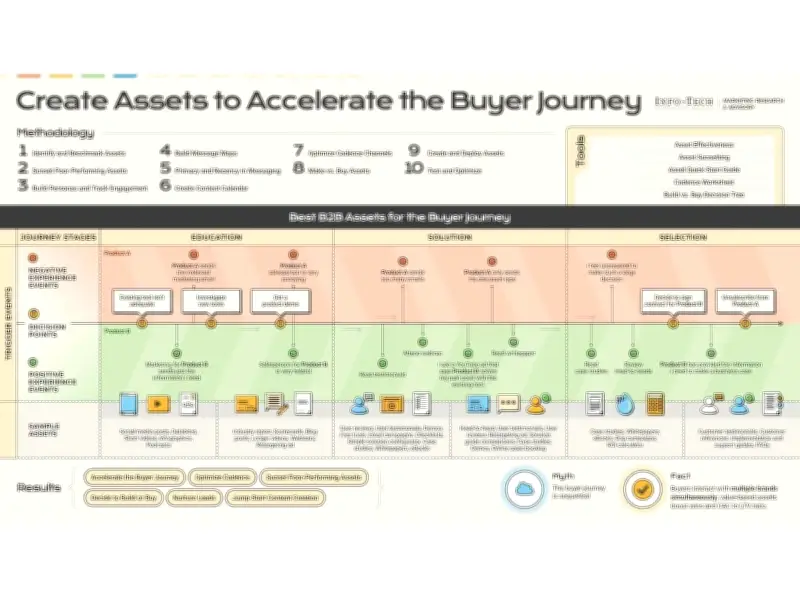
Info-Tech Research Group has published a new blueprint warning that low-value marketing assets are slowing buyer journeys and increasing customer acquisition costs. The report, titled Create Assets to Accelerate the Buyer Journey, provides a data-driven methodology for marketing leaders to benchmark asset performance, retire underperforming content, and build buyer-focused journeys that improve engagement, conversion, and revenue outcomes.
Ineffective Asset Strategies Hurt Conversion and Raise Costs
According to the blueprint, ineffective asset strategies lead to low conversion rates, rising customer acquisition costs, stalled buyer journeys, and diminished brand impact. Limited budgets, constrained teams, and a lack of buyer insight often leave marketers guessing which assets deserve further investment. Info-Tech's methodology helps organizations benchmark existing assets, retire underperforming content, and build high-value experiences aligned to buyer needs, preferred channels, and purchasing behaviors.
“Marketing teams often know they need more effective assets, but without buyer journey data, they are still guessing at what will move buyers forward,” said Terra Higginson, principal research director at Info-Tech Research Group. “Low-value assets do more than underperform; they slow conversion, increase acquisition costs, and weaken confidence in marketing’s ability to support revenue growth. A strong asset strategy uses data to decide what to keep, what to retire, and what to build next.”

Two-Phase Framework for Optimizing Marketing Assets
To help organizations move beyond campaign-focused content strategies and create more effective buyer experiences, Info-Tech's blueprint outlines a two-phase methodology. Phase 1 focuses on benchmarking and sunsetting assets, where marketing leaders evaluate the performance of existing assets to identify content that no longer supports buyer engagement or business objectives. This phase helps organizations benchmark current assets, uncover opportunities for improvement, and make informed decisions about which assets to update, retain, or retire.
Phase 2 involves building high-value content journeys that are aligned with buyer behaviors and preferences. The framework emphasizes using data to drive asset creation, ensuring that each piece of content moves buyers forward in their non-linear purchasing journeys across multiple competitors.
B2B Buyer Journeys Require a Shift in Asset Strategy
The report highlights that with B2B buyers moving through non-linear journeys across multiple competitors, marketing teams can no longer rely on one-off campaign assets to drive conversions. Instead, a cohesive, buyer-focused asset strategy is needed to improve engagement, conversion rates, and revenue outcomes.
Info-Tech's blueprint is designed to help marketing leaders make more informed asset decisions, ultimately reducing customer acquisition costs and improving the efficiency of marketing spend. The full blueprint is available to Info-Tech subscribers and provides detailed steps for implementing the two-phase framework.