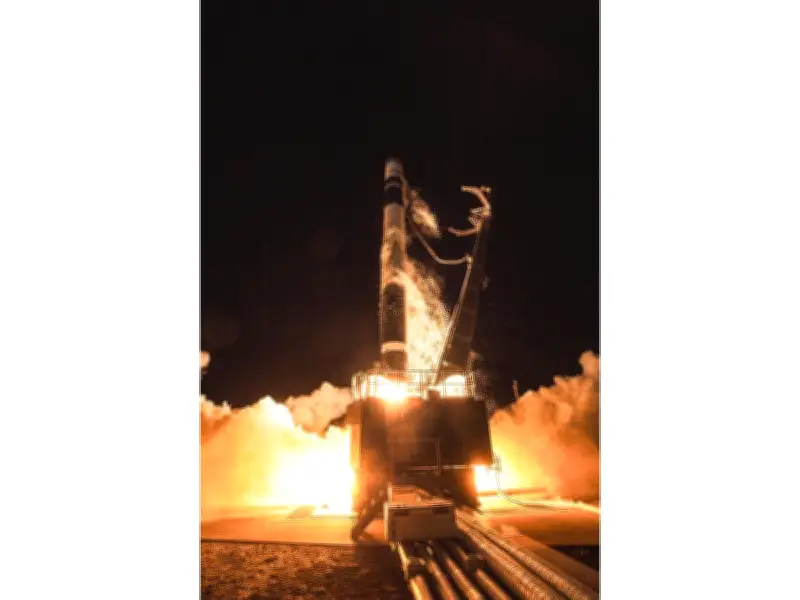
Rocket Lab Corporation (Nasdaq: RKLB) has achieved a historic milestone by launching the U.S. Space Force's VICTUS HAZE mission just 16 hours and 42 minutes after receiving the Notice to Launch. This shatters the previous responsive space record set by VICTUS NOX by more than 10 hours, establishing a new global benchmark for rapid call-up space capabilities.
Mission Details and Launch Timeline
The Electron rocket lifted off from Rocket Lab Launch Complex 1 in New Zealand at 10:19 pm NZT on June 19, 2026. The mission was conducted for the Space Systems Command's Space Safari Program Office under the Tactically Responsive Space (TacRS) program. Rocket Lab's Guidance, Navigation, and Control team calculated final trajectories, updated flight software, and coordinated global ground stations in just four hours.
End-to-End Space Capability
VICTUS HAZE marks the first time a single prime contractor has provided a complete all-in-one mission package for a TacRS mission. Rocket Lab vertically engineered, built, and tested the highly maneuverable Pioneer spacecraft, executed the rapid launch, and is now managing on-orbit operations. The spacecraft was fully commissioned in 37 hours and 36 minutes, beating the strict 72-hour deadline by more than 34 hours.

On-Orbit Operations and Significance
The Pioneer spacecraft is now conducting Rendezvous and Proximity Operations (RPO) in low Earth orbit, simulating a rapid threat-response scenario alongside a non-compliant satellite. This capability provides the U.S. and its allies with enhanced Space Domain Awareness and real-time intelligence to maintain superiority in an increasingly contested space domain.
Rocket Lab founder and CEO Sir Peter Beck stated: "Our launch-plus-spacecraft integrated mission capability is transformative for responsive space. By launching on demand with spacecraft at-the-ready we've shown we can secure and defend the nation's space interests rapidly, and that's a powerful capability for the United States and its allies. This is what modern space power looks like: the ability to reinforce and reimagine national security space architecture at will, and we're proud to be providing the nation with those next-generation space capabilities, today."