Cordless pruning tools have become a practical and economical option for Canadian homeowners tackling yard work, offering a middle ground between hand tools and gas-powered equipment. According to Steve Maxwell, a columnist, these tools allow DIYers to perform tasks that would otherwise require hiring a professional gardening service or arborist, saving significant costs.
Why Cordless Tools Are Gaining Popularity
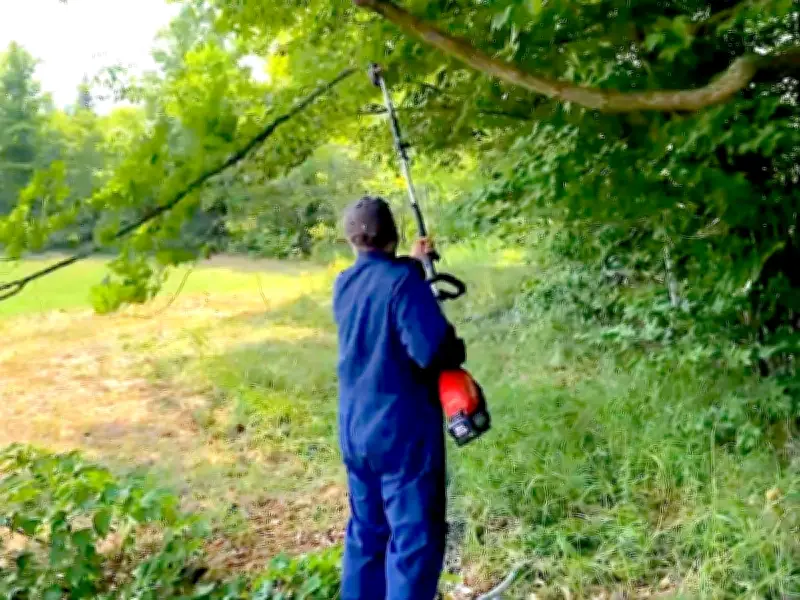
Every yard with trees and shrubs eventually reaches a stage where branches are too high for hand pruners, too thick for loppers, and too small to justify a chainsaw. Cordless pole saws and pruning saws fill this gap effectively. Maxwell notes that he has been using these tools at his own property and finds them capable of handling the majority of pruning tasks.
Gas-powered pole saws have been around for years, but they come with drawbacks: mixing fuel, adding bar-and-chain oil, starting the engine, dealing with noise, and wrestling with weight. Cordless versions sidestep much of this fuss. Users simply snap in a charged battery, top up the chain oil reservoir, and start cutting. Since most pruning cuts are not large, cordless power is sufficient for the job.

How to Safely Trim Branches
Maxwell emphasizes a safety technique for trimming long branches: make the first cut about a foot back from the trunk, then a second cut to remove the stub close to the trunk. This prevents bark from being stripped off the tree trunk as the branch tilts and falls under its own weight. With no weight on the stub, there is no danger of tearing bark.
Cordless tools may not match gas-powered ones for tough jobs, but for trimming and pruning they are preferred. However, Maxwell warns that cordless equipment carries a substantial price premium, often hidden in the batteries. A bare tool may seem reasonable, but two high-capacity batteries and a charger can change the calculation quickly. He advises preparing for this cost.
Pruning Saws: A Handy Addition
In addition to pole saws, cordless handheld pruning saws are another tool Maxwell uses frequently. These are small chainsaws with six- or eight-inch bars, sometimes sold as pruning saws and meant for one-handed use. They are not toys and deserve the same respect as any chainsaw, but they are handy for cutting thicker branches reachable from the ground, storm cleanup, brush piles, and trimming saplings too large for loppers.
Maxwell concludes that pruning is one area where cordless makes the most sense. Homeowners are not bucking firewood; they are removing limbs, shaping shrubs, opening trails, and cutting back growth that has crept into driveways, walkways, and buildings. For this work, convenience matters more than horsepower.