A new survey from talent solutions firm Robert Half reveals that over four in ten Canadian professionals intend to search for a new job in the second half of 2026. The research, based on responses from more than 1,500 professionals, indicates a significant uptick in job-seeking intentions, driven by desires for better benefits, career growth, and flexibility.
Rising Job Search Intentions
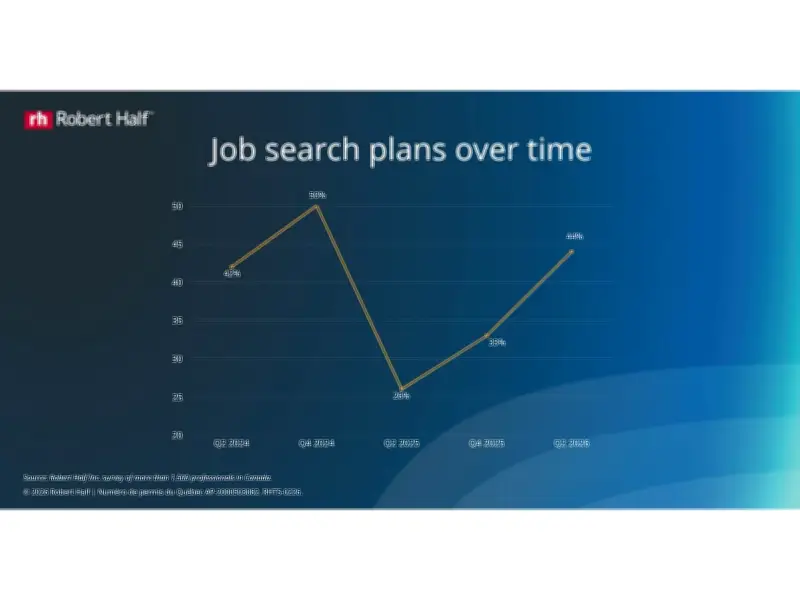
The survey found that 44 percent of Canadian professionals plan to look for a new job in the next six months, up from 33 percent in the first half of 2026 and 26 percent one year ago. This marks a notable increase in workforce mobility after a period of cautious career moves.
Millennial workers (53 percent), along with human resources (57 percent) and technology (53 percent) professionals, are the most likely to explore new opportunities. This trend reflects a broader reassessment of career priorities among key demographics.

Key Motivations for Job Changes
Professionals cited several primary reasons for seeking new roles:
- Better benefits and perks (38 percent)
- Career advancement opportunities (38 percent)
- Feeling underpaid based on skillset (33 percent)
- More flexibility (33 percent)
- More remote work options (31 percent)
Among those planning to stay in their current positions, the top reason is not wanting to lose the level of flexibility their workplace provides (46 percent). This underscores the importance of a competitive total rewards package, including flexibility, in attracting and retaining top talent.
Impact of AI on Job Searches
The survey also highlights how artificial intelligence is reshaping the job search landscape. Among those looking for a new role:
- 51 percent say AI-generated application materials have intensified competition for open roles
- 46 percent are concerned about keeping their skills current as AI evolves
Koula Vasilopoulos, senior managing director at Robert Half, commented: “AI is reshaping the job search in real and immediate ways. While these tools can help candidates apply more easily, they can also make it harder to stand out as applications become more uniform and less reflective of an individual’s true experience. Job seekers need to be thoughtful in how they use AI, while continuing to build in-demand skills and clearly articulate the value they bring.”
Broader Context
After several years of market uncertainty and cautious job search activity, professionals have become increasingly motivated to pursue new opportunities. The survey indicates a growing sense of confidence, with more people re-engaging in the job market and intentionally seeking roles that offer meaningful career progression, flexibility, and alignment with long-term goals.
“Over the past few years, many professionals have taken a more cautious approach to career moves, often prioritizing stability amid economic and workplace uncertainty,” said Vasilopoulos. “We’re seeing a growing sense of confidence with more people re-engaging in the job market and intentionally pursuing opportunities that offer meaningful career progression, flexibility and stronger alignment with their longer-term goals.”
Frequently Asked Questions
Why are more professionals planning to look for a new job?
Workers are reassessing their long-term career goals, compensation, flexibility, and growth opportunities. Professionals appear more willing to explore new roles that better align with their priorities.
How has AI changed the job search process?
AI has made it easier to apply for jobs but has also increased competition and made it harder for candidates to stand out. Many job seekers are concerned about keeping their skills current as AI evolves.