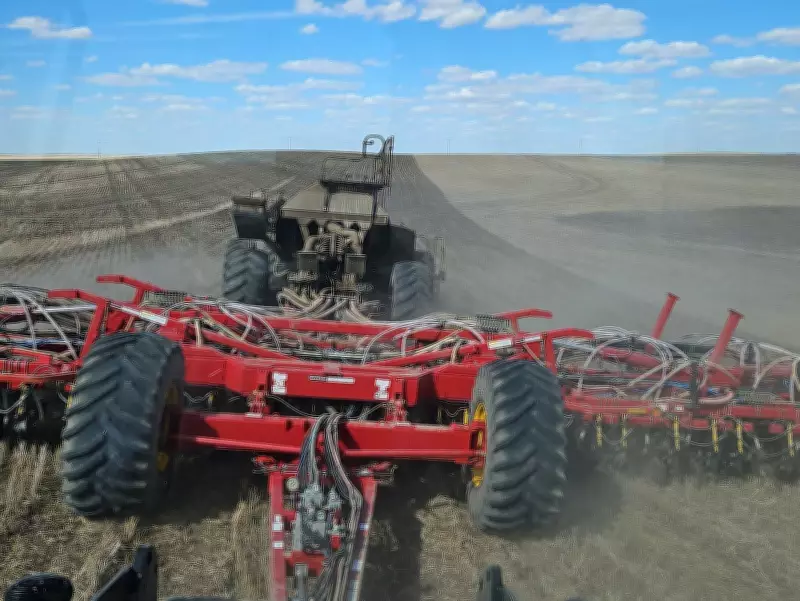
Saskatchewan crop farmer Jeremy Welter seeds a portion of his approximately 400-hectares of land near Kerrobert, Sask., in this undated handout photo. THE CANADIAN PRESS/Handout - Jeremy Welter (Mandatory Credit)
Seeding Delayed by Cold and Wet Conditions
Seeding operations across Saskatchewan have been delayed this spring due to persistently cold temperatures and overly wet soil conditions. Farmers, however, remain undeterred and are adapting their plans as they await more favorable weather. The delay has raised concerns about the growing season, but many producers are confident they can still achieve a successful harvest.
Impact on Crop Planting
The cold and wet conditions have prevented farmers from accessing their fields, pushing back the typical planting window. Some areas have received above-average precipitation, leaving fields saturated and unable to support heavy machinery. This has forced growers to postpone seeding of key crops such as wheat, canola, and barley.

Despite the challenges, farmers are using the extra time to prepare equipment and finalize their crop plans. Many are monitoring weather forecasts closely, hoping for a stretch of warm, dry days to allow for rapid planting.
Resilience in the Face of Adversity
Jeremy Welter, a farmer near Kerrobert, expressed cautious optimism. “We’ve seen delays before, and we know how to adjust. The key is to stay patient and be ready to move quickly when conditions improve,” he said. His sentiments are echoed across the province, where agricultural communities are known for their resilience.
Farmers are also considering adjustments to their crop rotations or using shorter-season varieties to mitigate the impact of the delayed start. Some may opt to plant more acres of crops that can be seeded later, such as oats or flax.
Looking Ahead
While the delay is concerning, agricultural experts note that Saskatchewan’s growing season often extends into late summer, providing a buffer. If conditions improve in the coming weeks, farmers can still achieve average yields. However, prolonged wet weather could lead to increased weed pressure and disease risks.
The provincial government and agricultural organizations are offering support and advice to help farmers navigate the situation. As the weather warms, the race is on to get seeds in the ground and ensure a bountiful harvest for 2026.