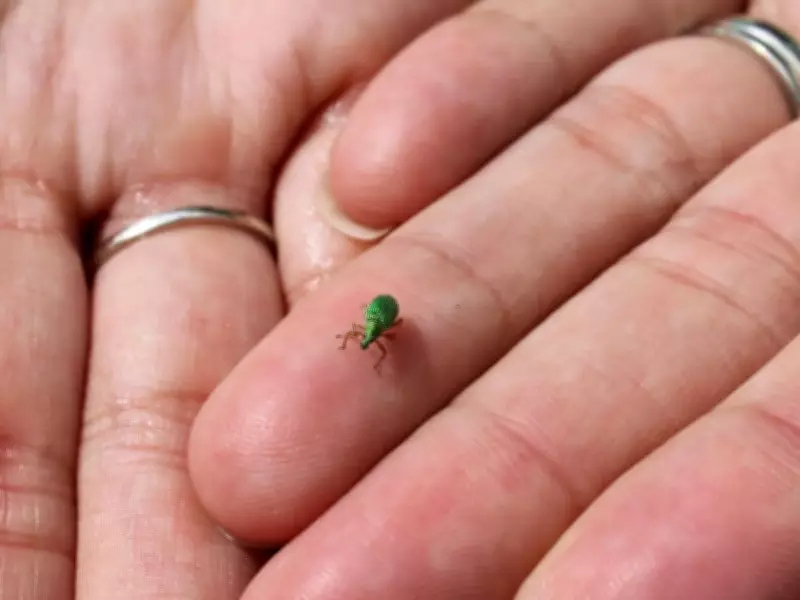
For quite a while now, I have been waging an escalating war on these invasive pests. Weevils. I got them. Never had them before, but they are here now. And it is bad.
The reason I am writing this, like I am a Depression-era cotton farmer, is that all I know about weevils I learned from the old Sally Field movie, Places in the Heart. The story is about the many challenges of cotton-crop farming, with the boll weevil being chief among them. It is thought that this particular weevil, which devastated all of the U.S. cotton-growing regions in the 1920s, migrated from Mexico in the 19th century. The boll weevil punctures the cotton seed pods — the boll — laying eggs in them, which destroys the emerging crop. The economic impact was massive. By 1978, this scourge was largely eradicated throughout U.S. cotton-growing regions following a successful pest management program. Field won the Best Actress Oscar for her role in the film. If you can still find it online, it is worth watching.
But back to my weevils. I first noticed I had a problem when one of my rhododendrons started to look like someone had taken a hole punch to the perimeter of each leaf. At the time, the damage was confined to just the one rhodo.

One of the rules of my garden is that I do not introduce anything that can disrupt the ecosystem — up or down the food chain. So, if I am going to try to reduce the mouse population, it will be through food source control or old-fashioned mouse traps. Poisons are not an option. I have had owls spend entire afternoons in my backyard, so I am not about to have half-dead mice luring owls to a toxic death. I put mouse traps out only after dark and, believe it or not, take them in before first light. It only takes one discovery of a hapless bird lying dead in a mouse trap to have you on your knees begging forgiveness from the patron saint of helpless things.
Where bad bugs are concerned, I take the gentlest route: insecticidal soaps, vinegar sprays, and the like. The weevils, however, have simply chuckled.
After more than a year of various tactical approaches, I adopted a more labour-intensive strategy. I placed a white sheet under the infested plants, the idea being to go out at night when the weevils feed, shake the plant, thereby dislodging the black weevils onto the white sheet. This approach yielded not one weevil.
Another ploy is even more time-consuming. It has me outside with a flashlight and gloves going mano-a-weevil directly. The idea is to carefully examine each leaf, searching for those little snout-nosed beetles and apprehending them in the act. My catch thus far? Exactly one weevil.
I have now bought beneficial nematodes to add to the soil to disrupt the life cycle of these nasty little adversaries, but that will only help with next year's invasion. I need help now. My most recent campaign has me tearing up strips of fabric, tying them on the lower branches of my infested shrubs, and then painting those strips with Tanglefoot paste. If the weevils attempt to climb the branch from their daytime hiding places below the plants, they will get ensnared in the sticky goo.
Any gardening triumphs or tips to share? I could use some advice.