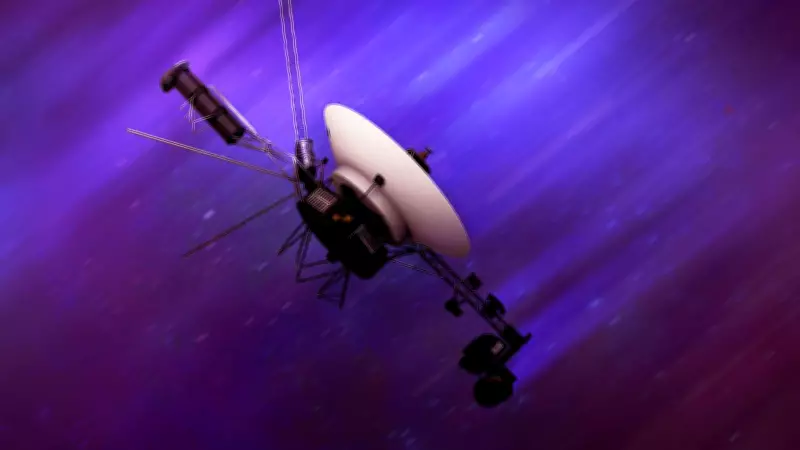
NASA's Voyager 1 spacecraft, humanity's most distant object, has shut down one of its scientific instruments to conserve power as engineers prepare for a crucial repair that could extend the mission. The probe, which entered interstellar space in 2012, has been operating for nearly 50 years, far exceeding its original design life.
Power Management Strategy
The instrument shutdown is a calculated move to reduce power consumption, buying time for engineers to implement a more permanent solution. Voyager 1's power supply, provided by radioisotope thermoelectric generators, has been steadily declining since launch in 1977. The spacecraft currently operates on about 60% of its original power output.
Instrument Deactivation Details
NASA confirmed that the deactivated instrument is the Cosmic Ray Subsystem (CRS), which measures cosmic rays from outside the solar system. This instrument has provided invaluable data about interstellar radiation and magnetic fields. The shutdown frees up approximately 4 watts of power, which can be redirected to other critical systems.

Engineers are now focused on developing a 'Big Bang' fix—a major software update and hardware reconfiguration designed to optimize power usage. This fix involves rewriting operating procedures and potentially repurposing heaters and other non-essential systems.
Mission Challenges and Achievements
Voyager 1 has faced numerous challenges over its decades-long journey, including memory degradation and thruster issues. Despite these, it continues to send data back to Earth from over 15 billion miles away. The spacecraft has revealed new insights about the heliosphere, the bubble of solar wind that surrounds our solar system.
Scientific Contributions
Among its many discoveries, Voyager 1 confirmed the existence of a strong magnetic field in interstellar space and detected unusual plasma waves. Its cameras captured iconic images of Jupiter and Saturn, including the first detailed views of their moons. The Golden Record aboard the spacecraft carries greetings from Earth, intended for any intelligent life that might encounter it.
Future Prospects
The success of the upcoming fix could allow Voyager 1 to continue operating until at least 2030, providing more data on interstellar conditions. However, eventual power loss will force the shutdown of all instruments, ending the mission. NASA engineers are also monitoring Voyager 2, which is following a similar trajectory but is currently about 1 billion miles closer to Earth.
Despite its age, Voyager 1 remains a testament to human ingenuity and curiosity. The decision to sacrifice one instrument for the sake of the whole mission underscores the delicate balance between exploration and resource management in deep space.