The Unconventional Logic Behind SpaceX's $1.75 Trillion Valuation
In the high-stakes world of aerospace, SpaceX has consistently defied conventional wisdom, and its latest valuation of US$1.75 trillion is no exception. This staggering figure, often met with skepticism, is rooted in a blend of groundbreaking technology, ambitious long-term goals, and a disruptive business model that challenges traditional industry norms.
Starship: The Cornerstone of Ambition
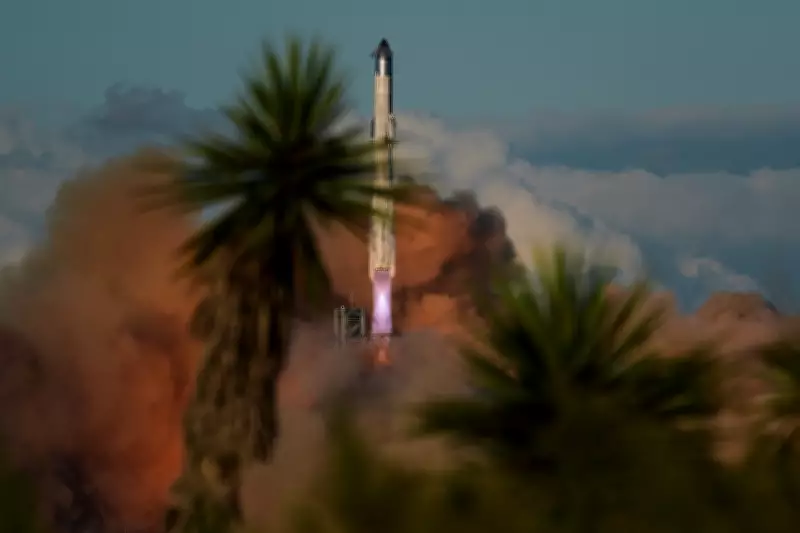
Central to this valuation is the Starship mega rocket, which has undergone rigorous testing, including a notable flight from Starbase, Texas, in October 2025. Unlike any previous spacecraft, Starship is designed for full reusability, aiming to drastically reduce launch costs and enable missions to Mars and beyond. This capability positions SpaceX not just as a launch provider, but as a pioneer in interplanetary travel, a market with virtually unlimited potential.
Beyond Rockets: A Multi-Faceted Strategy
SpaceX's valuation extends beyond its rockets. The company's Starlink satellite internet constellation is already generating revenue and promises to connect remote areas globally, tapping into a multi-billion-dollar telecommunications market. Additionally, contracts with NASA for lunar missions and partnerships for space tourism add layers to its revenue streams. This diversification mitigates risk and supports the lofty price tag, as investors bet on SpaceX's ability to dominate multiple sectors of the space economy.

Challenging Traditional Economics
Traditional aerospace firms often rely on government contracts and incremental innovation, leading to slower growth and higher costs. In contrast, SpaceX's private funding, agile development, and focus on cost-efficiency have enabled rapid advancements. The $1.75 trillion valuation reflects confidence in this model, suggesting that SpaceX could capture a significant share of the global space market, estimated to reach over $1 trillion annually by 2040. Critics argue this is speculative, but proponents point to past successes, like reducing launch costs by over 90%, as proof of its transformative impact.
The Mars Factor and Long-Term Vision
Perhaps the most unconventional aspect is SpaceX's goal of colonizing Mars. While this may seem like science fiction, it underpins the valuation by envisioning a future where SpaceX leads humanity's expansion into space. This long-term vision attracts investors willing to overlook short-term profits for potential epoch-making returns. As Elon Musk has stated, making life multi-planetary could safeguard humanity's future, adding a philosophical dimension that resonates beyond mere economics.
In summary, SpaceX's $1.75 trillion valuation is not just about current assets but a bet on revolutionary technology and audacious dreams. As Starship tests continue and Starlink expands, the world watches to see if this unconventional logic will redefine the frontiers of business and exploration.