NASA is racing against time to save the Swift telescope, a key astronomical observatory, from falling back to Earth. The space agency has launched a daring rescue mission to extend the telescope's operational life, which was at risk due to orbital decay.
Swift Telescope's Critical Mission
The Swift telescope, launched in 2004, has been instrumental in studying gamma-ray bursts and other cosmic phenomena. However, its orbit has been gradually decaying, threatening to end its mission prematurely. According to NASA, without intervention, the telescope could re-enter Earth's atmosphere within the next few years.
To prevent this, NASA is collaborating with private companies on a rescue plan. The mission involves sending a spacecraft to rendezvous with Swift and boost its orbit, potentially extending its life for another decade. Kieran Wilson, LINK’s principal investigator at Katalyst Space, stated, "This is a unique opportunity to demonstrate our technology and save a valuable scientific asset."

Technical Challenges and Collaboration
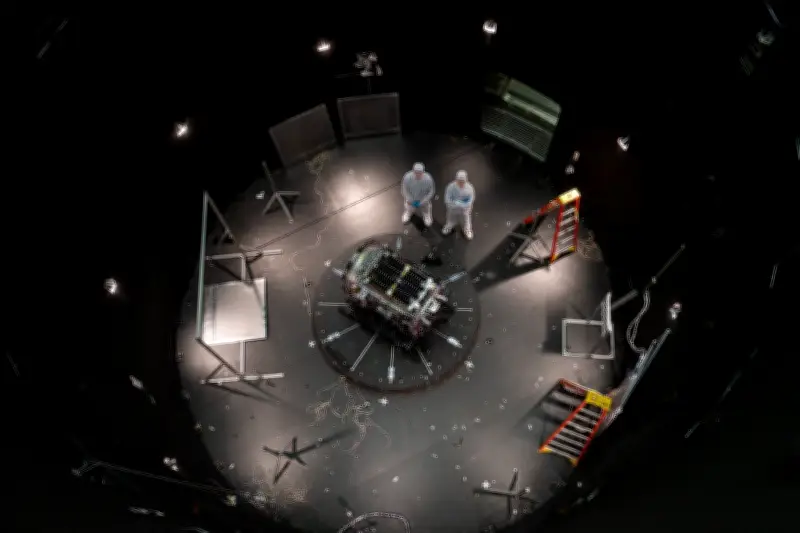
The rescue mission presents significant technical challenges. The spacecraft must precisely match Swift's orbit and then perform a delicate docking maneuver. Hunter Robertson, a space systems engineer at Katalyst Space, noted, "We've tested our systems extensively, including thermal vacuum testing at NASA's Goddard Space Flight Center." The mission also relies on advanced robotics and autonomous navigation.
NASA's partnership with Katalyst Space and other firms highlights a growing trend of public-private collaboration in space operations. This mission could set a precedent for servicing and refueling aging satellites, reducing space debris.
Impact on Science and Future Missions
If successful, the rescue would allow Swift to continue its observations of gamma-ray bursts, which provide insights into the early universe. The telescope has already contributed to numerous discoveries, including the first detection of a neutron star merger's afterglow. According to NASA, extending Swift's mission could lead to new breakthroughs in astrophysics.
The mission also demonstrates the feasibility of in-orbit servicing, which could be applied to other satellites. This approach could save billions of dollars and reduce the need for replacement launches. As space debris becomes a growing concern, such missions offer a sustainable solution for maintaining critical infrastructure in orbit.