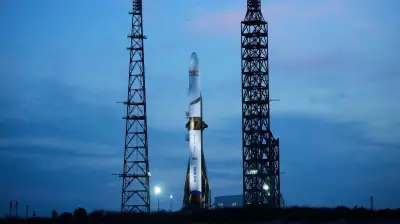
NASA Artemis II Launches Humanity's First Moon Mission in Over 50 Years
In a monumental leap for space exploration, NASA has successfully launched the Artemis II mission, marking humanity's first return to lunar exploration in more than half a century. This historic event represents the most significant moon mission since the Apollo program concluded in 1972, rekindling global interest in deep space exploration and scientific discovery.
A New Era of Lunar Exploration
The Artemis II launch signifies the beginning of a new chapter in space exploration, with the mission carrying a diverse crew of astronauts on a journey around the moon. This mission serves as a crucial test flight for NASA's ambitious Artemis program, which aims to establish sustainable human presence on the lunar surface and eventually pave the way for missions to Mars.
Canadian Participation and International Collaboration
Canadian astronaut Jeremy Hansen is among the crew members, making this mission particularly significant for Canada's space program. His participation underscores the international collaboration that defines modern space exploration, with multiple countries contributing expertise and resources to advance humanity's presence in space.

The Artemis program represents a coordinated effort between NASA, the Canadian Space Agency, and other international partners, demonstrating how global cooperation can achieve what no single nation could accomplish alone in space exploration.
Technological Advancements and Mission Objectives
Artemis II incorporates numerous technological advancements developed over the past five decades, including:
- Advanced life support systems designed for longer duration space travel
- Improved radiation protection for crew safety during deep space missions
- Enhanced communication systems for maintaining contact with mission control
- Sophisticated navigation technology for precise orbital maneuvers
The mission will test these systems in the challenging environment of deep space, gathering crucial data that will inform future Artemis missions and eventual lunar landings.
Scientific Significance and Future Implications
Beyond its technical achievements, Artemis II carries profound scientific importance. The mission will provide researchers with valuable data about:
- Human physiological responses to extended deep space travel
- Radiation exposure levels beyond Earth's protective magnetic field
- Lunar orbital dynamics and potential landing site characteristics
- Spacecraft performance in the unique environment of cis-lunar space
This mission represents more than just a return to the moon – it serves as a stepping stone toward establishing permanent human presence beyond Earth and advancing our understanding of the solar system.
Public Engagement and Educational Impact
The Artemis II launch has captured global attention, inspiring a new generation of scientists, engineers, and space enthusiasts. Educational institutions worldwide are incorporating mission updates into their curricula, while space agencies are leveraging public interest to promote STEM education and career opportunities in aerospace fields.
As the mission progresses, NASA and its partners will continue to share updates, images, and scientific findings with the public, maintaining engagement throughout this historic journey and building momentum for future space exploration initiatives.