In a historic achievement for space exploration, Canadian astronaut Colonel Jeremy Hansen and his Artemis II mission crew have boldly ventured farther from Earth than any humans before, setting a new deep space record. This milestone marks a significant moment in Canada's contributions to lunar and interplanetary missions.
A Record-Breaking Journey
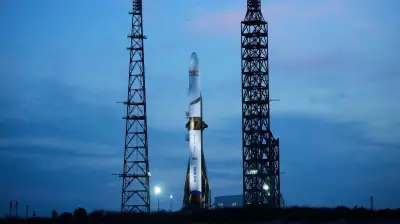
Early Monday afternoon, Hansen, alongside NASA astronauts Victor Glover, Christina Koch, and Commander Reid Wiseman, surpassed the previous record of 400,171 kilometers from Earth, established by the Apollo 13 mission in 1970. The Artemis II crew, aboard the Orion spacecraft, is currently on a 10-day mission that launched on April 1, 2026, testing critical systems including NASA's Space Launch System rocket and life-support technologies.
Canadian Pride in Space
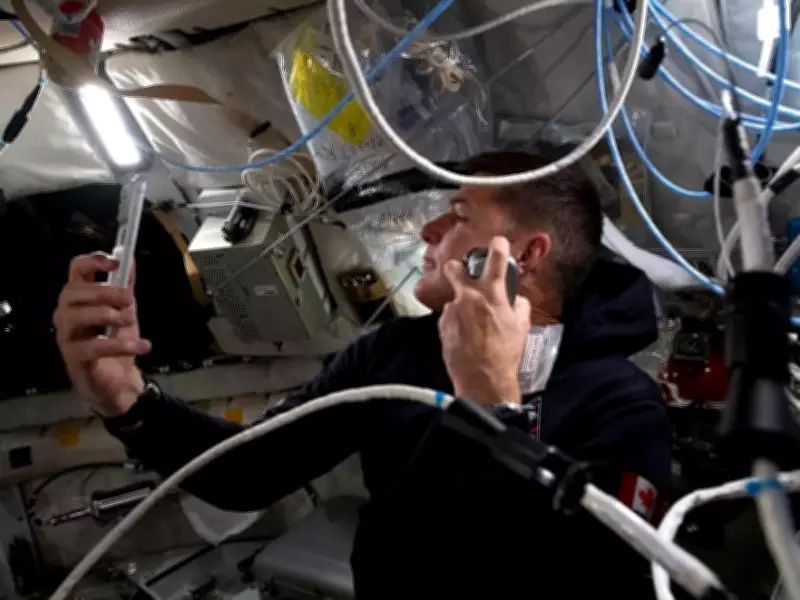
Jeremy Hansen, a native of southwestern Ontario and a former Royal Canadian Air Force fighter pilot, has become the first Canadian to fly to the moon. This accomplishment positions Canada as only the second nation to send an astronaut on such a distant journey. The mission involves a lunar flyby around the far side of the moon, a feat not attempted with humans since Apollo 17 in 1972.

During their trajectory, the crew has been conducting observations and capturing photographs of the lunar surface. They have proposed naming a feature in honor of Carroll, the late wife of Commander Wiseman. Additionally, astronauts have reported visibility of Earth, Mercury, Venus, and Saturn along their route, enhancing scientific data collection.
Mission Details and Return
The Orion spacecraft is following a free-return lunar trajectory, designed to ensure a safe and efficient journey back to Earth. Splashdown is scheduled in the Pacific Ocean near San Diego, California, concluding this groundbreaking expedition. NASA's YouTube Channel offers live streaming of the mission for public viewing.
Canada's Legacy in Lunar Exploration
Canada has a rich history of involvement in moon exploration, dating back decades. For instance, Neil Armstrong utilized landing gear manufactured by Héroux Aerospace, now known as Héroux-Devtek, based in Longueuil, Quebec, during the iconic 1969 Apollo 11 landing. Furthermore, astronauts from Apollo 16 and 17 missions trained in Sudbury, Ontario, to study geological formations analogous to those on the moon, leveraging the Sudbury Basin's comet-impact similarities.
This Artemis II mission not only celebrates human ingenuity and international collaboration but also underscores the vital role of Canadian technology and expertise in advancing space science. As the crew continues their journey, they embody the spirit of exploration that drives future missions to the moon and beyond.