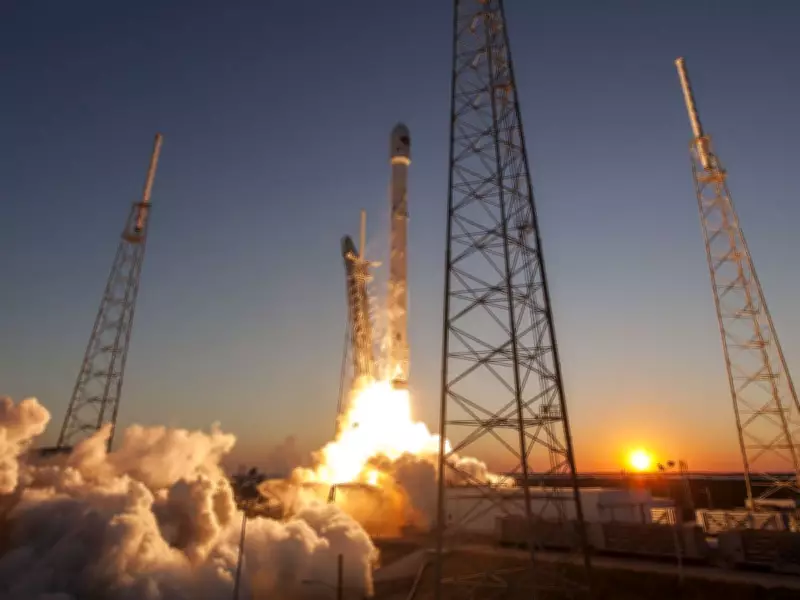
The Canadian government has taken a significant step toward establishing sovereign space-launch capabilities with new legislation introduced on Tuesday. The bill aims to reduce the nation's heavy reliance on foreign providers, particularly the United States, for launching satellites into orbit.
Asserting Sovereignty in Space
Prime Minister Mark Carney's administration is extending its campaign to assert Canadian sovereignty into the final frontier. Transport Minister Steven MacKinnon emphasized that Canada remains the only Group of Seven country without its own space launch capabilities, creating vulnerabilities in critical infrastructure.
"Currently, we must rely on foreign countries, most often the United States, to get Canadian satellites in orbit," MacKinnon told reporters in Ottawa. "This reliance on the United States sends investment out of our country, creates costly delays and leaves critical infrastructure exposed to decisions beyond our control."

Regulatory Framework and Industry Impact
The proposed legislation would grant the government authority to oversee launch and re-entry activities from Canadian territory while providing much-needed regulatory clarity for the burgeoning space industry. This move comes as Deloitte estimates the Canadian space-launch sector could be worth as much as $40 billion by 2040.
The timing coincides with heightened tensions between Canada and the United States, with former President Donald Trump's tariffs and comments about Canada becoming a 51st state prompting Carney's government to seek greater independence across multiple sectors.
Current Dependencies and Future Plans
Canada's largest satellite operator, Telesat Corp., currently depends on Elon Musk's SpaceX to launch its next-generation fleet of low-Earth orbit satellites. These satellites are designed as an alternative to SpaceX's Starlink constellation.
The government has already taken preliminary steps toward domestic launch capacity. Last month, officials announced a 10-year, $200 million agreement to utilize a private launchpad near Canso, Nova Scotia, operated by Maritime Launch Services Inc.
Strategic Benefits and Timeline
MacKinnon outlined several strategic advantages of homegrown launch capabilities, including:
- Enhanced ability to monitor and respond to wildfires
- Improved protection for marine ecosystems
- Strengthened Arctic security measures
The Transport Minister expects rockets to begin launching from Canadian soil within two to three years, marking a significant milestone in the country's space ambitions.
Financial Commitment and Industry Outlook
The government's most recent budget allocated $183 million over three years to the Department of National Defence specifically for building launch capability within Canada. This investment, combined with the new regulatory framework, positions Canada to capture a substantial portion of the growing global space economy.
As the legislation moves through Parliament, industry observers will be watching closely to see how quickly Canada can transform from a space-launch dependent nation to a competitive player in the global market. The successful implementation of this initiative could create thousands of high-tech jobs while securing Canada's position in an increasingly important sector.