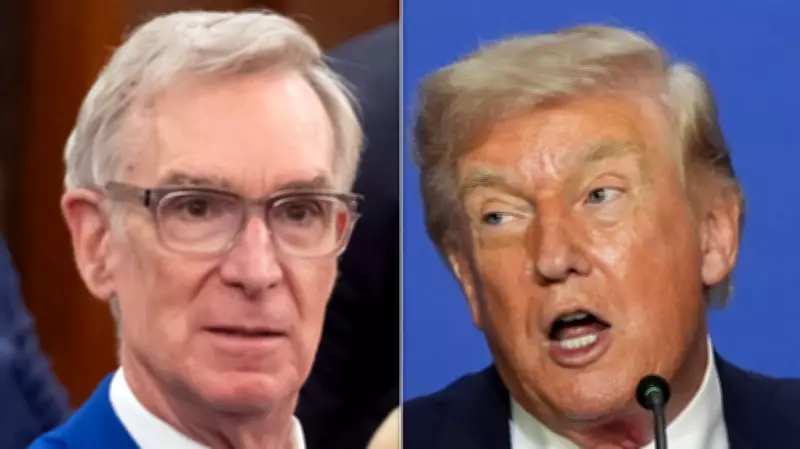
Science communicator Bill Nye has issued a sharp rebuke against the Trump administration's proposed fiscal year 2027 budget, which includes deep cuts to NASA funding. In an interview with NBC News, Nye labeled the planned reductions as a "huge mistake" that contradicts the inspirational achievements of NASA's Artemis II mission, where astronauts recently flew by the far side of the moon using the Orion spacecraft.
Proposed Cuts Threaten NASA's Science Programs
The White House's budget proposal calls for a 23% overall reduction in NASA funding, amounting to approximately $5 billion. This includes a staggering 46% cut specifically to the agency's science programs. "Meanwhile, someone wants to, sort of—how to say, end NASA," Nye remarked, highlighting the drastic nature of these proposed reductions. He emphasized that this comes at a "strange time" when NASA continues to achieve remarkable milestones in space exploration.
Constitutional Mandate for Science Advancement
Nye, who serves as chief ambassador and vice chairman of The Planetary Society, pointed to Article 1, Section 8 of the U.S. Constitution, which grants Congress the power to "promote the Progress of Science." "We like to remind people, that's what keeps the U.S. ahead," he stated, underscoring the foundational role of scientific advancement in maintaining national leadership. He added unequivocally, "You cannot be a leader in space without being a leader in science. So this is just a mistake."

History of Similar Proposals and Congressional Response
This year's budget pitch mirrors last year's attempt to slash NASA's science budget by nearly half. In a previous interview with HuffPost, Nye stressed that such cuts would represent an "extraordinary waste" of billions of dollars, potentially stripping funding from already operational missions. However, Congress rejected those deep cuts in January, approving a $24.4 billion budget for NASA instead. The agency's economic impact remains substantial, having generated an estimated $75.6 billion for the U.S. economy in 2023.
Questions About Budget Preparation
Nye expressed confusion over why the White House would propose similar cuts again, noting that the current budget request appears to be prepared in a "much lazier" fashion. He cited specific issues, including typos, references to the wrong fiscal year (2026 instead of 2027), and arbitrary omissions of language. "It's just sort of cut and paste without paying attention," he criticized, suggesting a lack of diligence in the proposal's preparation.
Bipartisan Opposition Expected
In an interview with CBS News, Nye summarized the proposed cuts as both a "bad idea" and a "tone-deaf" move by the administration. He claimed that representatives from "either side of the aisle" in Congress generally oppose cutting NASA's funding and expressed confidence that lawmakers would not vote to slash the agency's budget this time around. Nye also emphasized NASA's global reputation, calling it America's "best brand" recognized worldwide.
The debate over NASA's funding highlights ongoing tensions between budgetary constraints and the strategic importance of maintaining U.S. leadership in space exploration and scientific innovation.