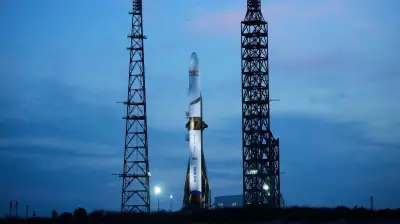
In a remarkable fusion of historical legacy and cutting-edge space exploration, NASA's Artemis II mission is preparing for its monumental launch while sharing both physical office space and fundamental physics principles with the iconic Apollo program. This symbolic connection underscores the enduring foundations of lunar travel as humanity prepares to return to the Moon.
A Bridge Between Eras of Space Exploration
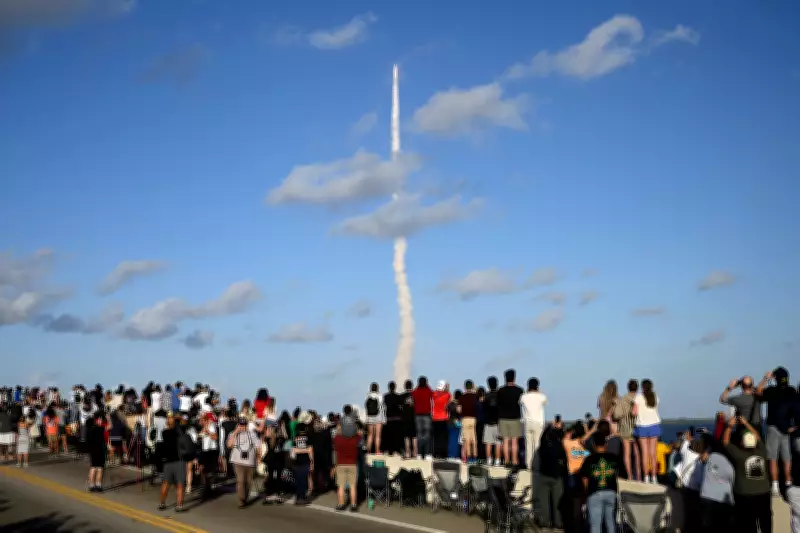
The Artemis II mission, scheduled for launch in April 2026, will carry astronauts on a journey around the Moon, marking a significant step toward establishing a sustainable human presence on the lunar surface. Spectators gathered on the A. Max Brewer Bridge in Titusville, Florida, witnessed a powerful demonstration of this ambition as the Artemis II moon rocket lifted off, evoking memories of Apollo launches from decades past.
Shared Facilities and Operational Heritage
NASA has strategically housed Artemis mission operations within the same facilities that once supported the Apollo program. This decision is not merely logistical but deeply symbolic, creating a tangible link between the pioneering efforts of the 1960s and 1970s and today's advanced technological endeavors. The shared workspace serves as a constant reminder of the accumulated knowledge and experience that informs current mission planning.

The physics governing lunar trajectories remain fundamentally unchanged, meaning Artemis missions utilize similar orbital mechanics and gravitational calculations as their Apollo predecessors. While spacecraft technology has advanced dramatically with modern materials, computer systems, and safety features, the core principles of escaping Earth's gravity and navigating to the Moon continue to rely on the same physical laws that guided Apollo missions.
Technological Evolution Within Constant Physical Laws
Despite these shared foundations, the Artemis program incorporates substantial technological innovations. Enhanced life support systems, improved radiation protection, and sophisticated communication networks represent significant advancements over Apollo-era capabilities. The mission also benefits from decades of additional research in areas such as microgravity effects on the human body and sustainable resource utilization.
The continuity between programs extends beyond physics and facilities to include operational wisdom. Lessons learned from Apollo missions—both successes and challenges—directly inform Artemis safety protocols, contingency planning, and crew training procedures. This institutional knowledge transfer ensures that today's astronauts build upon rather than repeat the experiences of their predecessors.
Cultural and Scientific Significance of the Connection
The deliberate physical and conceptual links between Artemis and Apollo serve multiple purposes beyond practical efficiency. They honor the historical achievements of early space exploration while demonstrating how foundational scientific principles enable continued progress. This connection also helps maintain public engagement by relating new missions to familiar historical milestones.
As the Artemis program advances toward its goals of lunar exploration and eventual Mars missions, its relationship to the Apollo legacy provides both inspiration and practical guidance. The shared office space and physics principles represent more than coincidence—they embody the cumulative nature of space exploration, where each generation stands on the shoulders of those who reached for the Moon before them.