In a monumental leap for human space exploration, the Artemis II mission has achieved what no crew has accomplished since the Apollo 17 mission in December 1972. For the first time in over five decades, humans have ventured beyond Earth's orbit, marking a new era in cosmic discovery.
Historic Maneuver Propels Orion Toward the Moon
On Thursday evening, the four astronauts aboard NASA's Orion spacecraft executed a critical "trans-lunar injection burn." This precise engine firing successfully set the capsule on a trajectory for a lunar flyby, propelling it away from Earth's gravitational influence and toward the moon.
Breathtaking Views from Deep Space
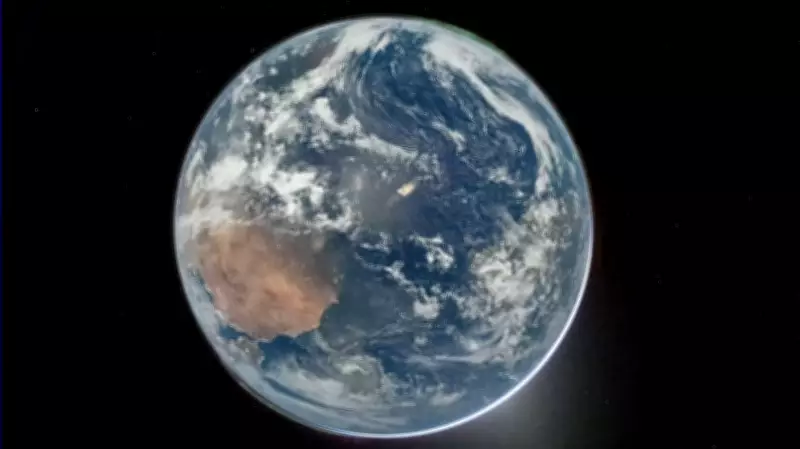
As Orion began its journey into the void, Commander Reid Wiseman captured extraordinary photographs that have captivated the world. One image reveals Earth as a perfect sphere, adorned with brilliant blues and browns, swirling cloud formations, and even a shimmering green aurora visible in the northern hemisphere.

This remarkable photograph, downlinked from the Orion capsule on Friday, April 3, 2026, provides a perspective of our home planet that few humans have ever witnessed firsthand.
A second photograph offers an equally poignant view, showing Earth as a vibrant, luminous dot peeking through the spacecraft's window, suspended against the cold, infinite blackness of space.
Mission Progress and Trajectory
As of Friday morning, the Orion spacecraft was traveling moonward at an impressive speed of 4,084 miles per hour, having already reached a distance of 93,000 miles from Earth. NASA is providing real-time tracking of the mission through its official website, allowing the public to follow this historic journey moment by moment.
Unprecedented Deep Space Exploration
The spacecraft is scheduled to fly by the far side of the moon at an altitude ranging between 3,000 and 9,000 miles. This trajectory will carry the Artemis II crew further into deep space than any human in history. For context, the Apollo missions typically orbited approximately 70 miles above the lunar surface, making Artemis II's path significantly more distant and ambitious.
Anticipated Lunar Flyby and Photography
The mission promises to deliver even more spectacular imagery in the coming days. The astronauts are expected to perform their lunar flyby on Monday, April 6, during which they will capture high-resolution photographs of the moon's far side. This region has never been directly observed by human eyes, making this photographic opportunity particularly significant for scientific understanding and public engagement.
This mission represents not just a technological achievement, but a profound moment of human curiosity and exploration, rekindling the spirit of discovery that has driven space exploration for generations.