Artemis II Astronauts Complete Historic Moon Mission with Pacific Splashdown
The four astronauts of NASA's Artemis II mission have successfully returned to Earth, concluding the first crewed voyage to the moon in over half a century. Their gumdrop-shaped Orion spacecraft, named Integrity, splashed down in the Pacific Ocean off the coast of Southern California on Friday evening.
A Decade's First: Crewed Lunar Return
The dramatic finale began with the separation of Orion's crew capsule from its service module, followed by a fiery re-entry through Earth's atmosphere. During this critical phase, the capsule experienced a six-minute radio blackout before deploying parachutes for a gentle ocean landing.
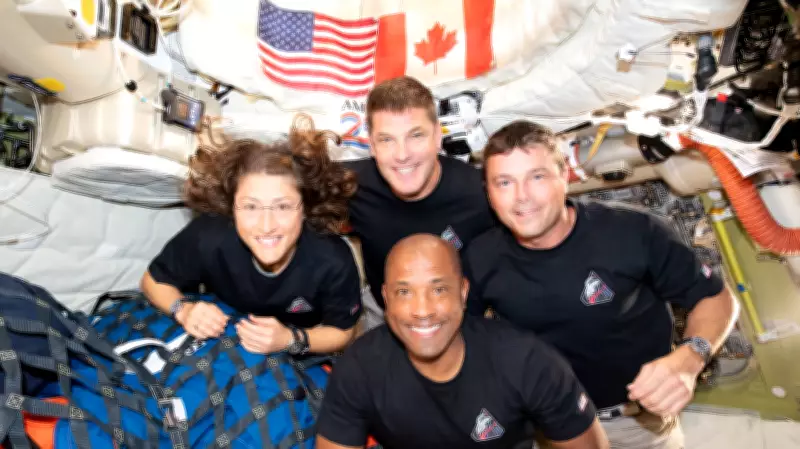
If all proceeded according to plan, U.S. astronauts Reid Wiseman, Victor Glover, and Christina Koch, along with Canadian astronaut Jeremy Hansen, found themselves safely bobbing in the Pacific waters shortly after 8 p.m. Eastern Time. The targeted landing zone was located near San Diego, where recovery teams stood ready.

Historic Journey and Milestones
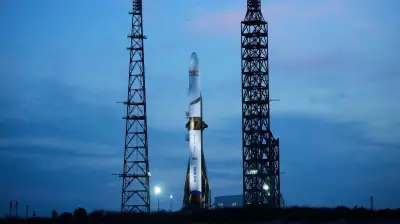
The quartet began their extraordinary journey on April 1, launching from Cape Canaveral, Florida aboard NASA's powerful Space Launch System rocket. After achieving initial Earth orbit, they journeyed around the far side of the moon, venturing deeper into space than any humans before them.
This mission marked several historic firsts: the first astronauts to fly near the moon since the Apollo program ended in the 1970s, with Glover becoming the first Black astronaut on a lunar mission, Koch the first woman, and Hansen the first non-U.S. citizen to participate in such an endeavor.
Critical Testing and Technological Achievements
The return to Earth served as a crucial test for Orion's heat shield, which had experienced unexpected scorching during the uncrewed Artemis I test flight in 2022. NASA engineers carefully recalibrated the descent trajectory for Artemis II to reduce heat buildup and minimize risks.
Despite these precautions, Orion faced extreme conditions during re-entry, with temperatures outside the capsule expected to reach approximately 5,000 degrees Fahrenheit as it plunged into the atmosphere at speeds around 25,000 miles per hour.
Precision Navigation and Recovery Operations
The spacecraft's precise descent path depended on a series of carefully timed course-correction maneuvers using its jet guidance thrusters. The final of three such propellant burns occurred approximately five hours before splashdown.
Once the capsule entered the upper atmosphere, the entire descent sequence—including the six-minute communication blackout—took less than fifteen minutes before parachute deployment. Recovery operations were expected to require about an hour to secure the spacecraft and assist the astronauts in exiting the capsule.
Stepping Stone to Future Exploration
Artemis II represents a critical dress rehearsal for NASA's planned lunar landing attempt later this decade, which would mark humanity's first return to the moon's surface since Apollo 17 in 1972. The ultimate objective of the Artemis program extends beyond the moon, aiming to establish a sustainable lunar presence as a stepping stone toward eventual human exploration of Mars.
During their mission, the crew reached a record distance of 252,756 miles from Earth, surpassing the previous record set by Apollo 13 astronauts in 1970. This achievement comes at a time when space exploration continues to capture global imagination while demonstrating significant technological advancements.