Artemis II Astronauts Successfully Execute Critical Engine Burn, Setting Course for Moon
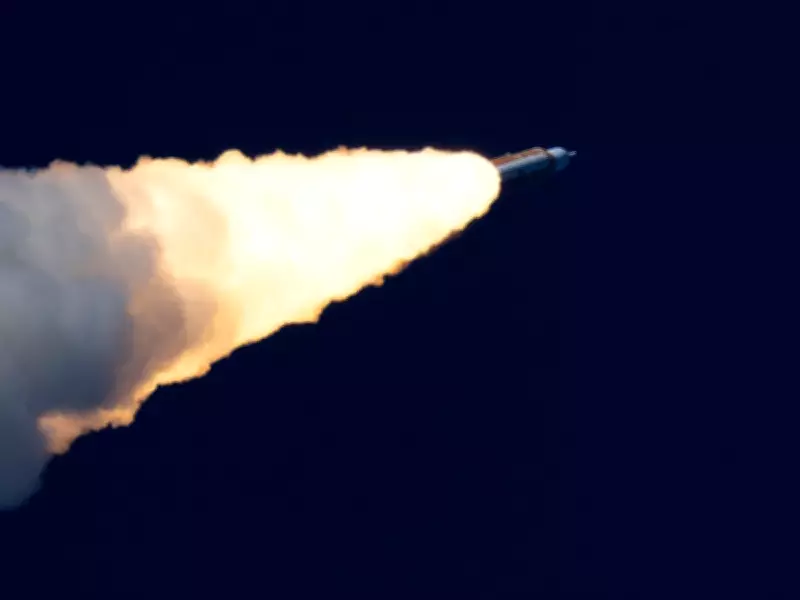
NASA's ambitious Artemis II mission has achieved a crucial milestone as the Lockheed Martin-built Orion capsule successfully ignited its main engine in space late Thursday. This critical maneuver, known as the translunar injection burn, has placed the four-member crew on a precise trajectory toward the moon for what promises to be a historic lunar flyby.
Precision Maneuver with Little Room for Error
The translunar injection burn represented a moment of high tension for mission controllers, as the procedure had minimal tolerance for error to ensure Orion would follow the correct path for its 10-day mission to orbit the moon. Astronaut Christina Koch captured the significance of the moment before the engine ignited, stating, "With this burn to the moon, we do not leave Earth. We choose it."
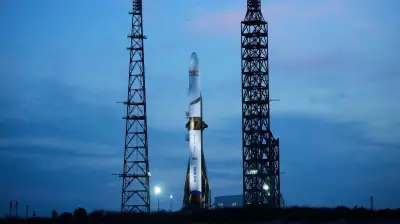
The Artemis II crew launched from NASA's Kennedy Space Center in Florida on Wednesday evening aboard the powerful Space Launch System rocket. The international crew consists of NASA astronauts Reid Wiseman as commander, Victor Glover as pilot, and Christina Koch as mission specialist, joined by Canadian Space Agency astronaut Jeremy Hansen, who serves as mission specialist.

Journey Timeline and Lunar Approach
According to mission plans, the crew will require approximately four days to reach lunar vicinity, with a scheduled flyby of the moon's surface set for April 6. If the mission proceeds as intended, the astronauts' trajectory will bring them within approximately 4,112 miles (6,618 kilometers) of the lunar surface. From their vantage point in the Orion capsule, the moon will appear roughly the size of a basketball held at arm's length through the spacecraft window.
This mission represents a significant achievement for NASA, which has invested years of development and billions of dollars to reach this point in its lunar exploration program. The space agency has established long-term objectives to establish a permanent base on the moon where astronauts can live and conduct scientific work.
Historic Significance and Mission Objectives
While the Artemis II crew will not land on the lunar surface during this mission—that milestone is planned for a future crew in 2028—their journey will nonetheless make history. Should the mission unfold successfully, the Artemis II astronauts will surpass the distance record set by the Apollo 13 crew in 1970, becoming the farthest-traveling humans in space history.
The mission derives its name from Artemis, the twin goddess of Apollo in Greek mythology, paying homage to NASA's historic moon missions of the 1960s and 1970s while signaling a new era of lunar exploration.
Scientific Activities and Communications
During their journey to the moon, the Artemis II crew will conduct various tests and experiments while preparing to image the lunar surface during their close approach. The mission includes a planned communication event that will mark a first for NASA: a live call between the Artemis II crew and astronauts aboard the International Space Station.
This groundbreaking mission represents not only a technological achievement but also an international collaboration, with Canadian astronaut Jeremy Hansen playing a key role in what may become humanity's next great leap in space exploration.