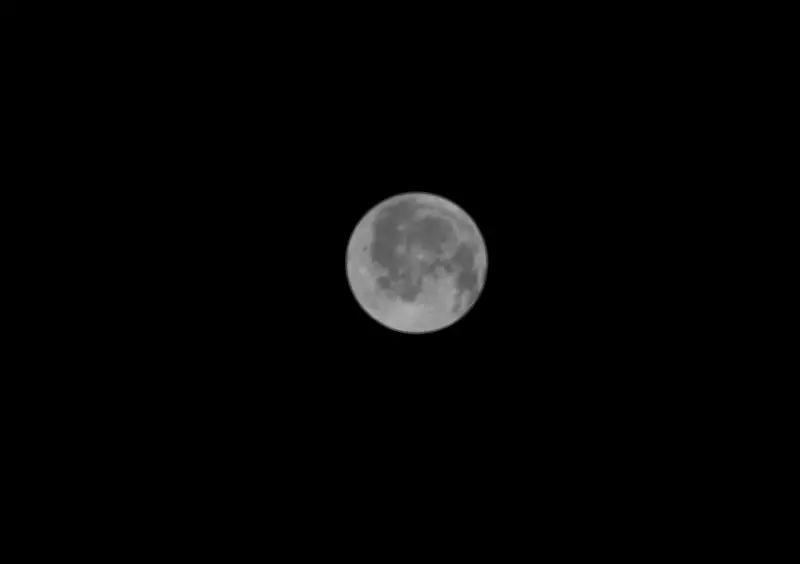
Artemis Astronauts Rely on Human Vision as Primary Lunar Study Instrument
More than five decades after humanity first orbited the Moon, Artemis astronauts are repeating this historic achievement with a surprisingly fundamental scientific tool: their own eyes. Despite remarkable technological advancements since the Apollo era, NASA continues to depend on astronaut eyesight to gather crucial lunar data that cameras and sensors struggle to capture.
The Human Eye as Ultimate Scientific Camera
Kelsey Young, lead scientist for the Artemis 2 mission, explained to AFP that "the human eye is basically the best camera that could ever or will ever exist." She emphasized that "the number of receptors in the human eye far outweighs what a camera is able to do," particularly regarding color perception, contextual understanding, and photometric observations.
While modern cameras excel in certain technical aspects, human vision possesses unique advantages for lunar study. Astronauts can instantly detect subtle color variations and comprehend how changing lighting conditions alter surface textures and contours. These visual nuances provide scientifically valuable information that often remains elusive in photographs or video recordings.

Comprehensive Training for Field Scientists
The four Artemis 2 crew members underwent extensive preparation spanning over two years to maximize their observational capabilities during the lunar flyby. Their training transformed them into field scientists through a multifaceted approach including:
- Classroom instruction on lunar geology and observation techniques
- Geological expeditions to Iceland and Canada simulating lunar conditions
- Multiple simulated Moon flybys replicating their actual mission parameters
- Memorization of the Moon's "Big 15" features for spatial orientation
Using inflatable Moon globes, astronauts practiced observing how solar angles affect lunar surface colors and textures, refining their note-taking and observational skills for the critical mission moments.
Mission Objectives and Visual Challenges
During their several-hour lunar flyby, Artemis astronauts will study specific sites and phenomena as part of ten prioritized scientific objectives established by NASA. They'll observe the celestial body with both naked eyes and onboard cameras, with the Moon appearing "about the size of a basketball held at arm's length" according to Noah Petro, head of NASA's planetary geology laboratory.
Petro expressed particular interest in whether astronauts will detect color variations on the lunar surface, noting that human vision's color sensitivity could reveal geological details invisible to instruments. Victor Glover, pilot of the Orion spacecraft, described eyes as a "magical instrument" before the mission's launch, highlighting the crew's appreciation for this biological observation tool.
The international crew—commander Reid Wiseman, pilot Victor Glover, mission specialist Christina Koch, and Canadian astronaut Jeremy Hansen—has demonstrated both readiness and enthusiasm for their visual scientific mission. As Young confirmed with a smile, "I can tell you, they are excited and they are ready" to apply their trained observational skills during this historic lunar encounter.