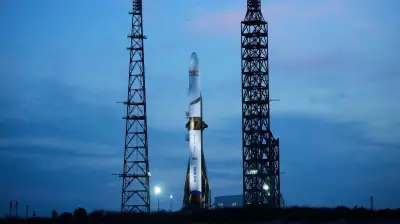
The Artemis 2 mission has made history as its four astronauts have traveled farther from Earth than any humans before, breaking a long-standing record set by the Apollo 13 crew over five decades ago. This monumental achievement marks a significant step in NASA's renewed efforts to explore deep space and pave the way for future lunar and Martian missions.
Breaking the Apollo 13 Barrier
At precisely 1:57 p.m. EDT on April 6, 2026, astronauts Reid Wiseman, Victor Glover, Christina Koch, and Canadian Jeremy Hansen crossed the 400,171-kilometer mark established by the Apollo 13 mission on April 15, 1970. This momentous event was captured in real-time, with NASA officials confirming the milestone as the Orion spacecraft continued its trajectory toward the moon.
Maximum Distance Expected Tonight
Officials anticipate that the Artemis 2 mission will reach its peak distance from Earth tonight at 7:07 p.m. EDT, achieving an unprecedented 406,778 kilometers. This distance not only surpasses the Apollo 13 record but also sets a new benchmark for human spaceflight, demonstrating the advanced capabilities of modern spacecraft and mission planning.

Scientific Observations and Lunar Flyby
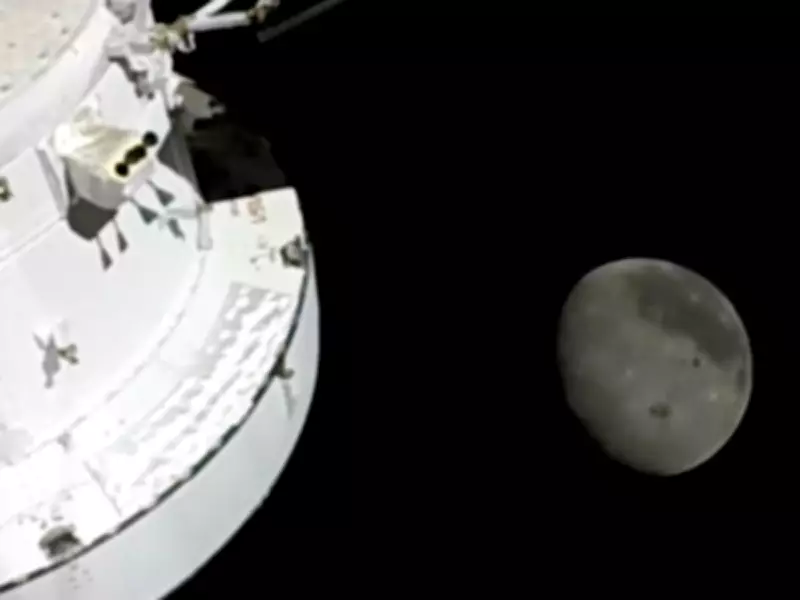
Following the record-breaking achievement, the crew entered a critical flyby period. During this phase, the Orion spacecraft's main cabin windows are oriented toward the moon, allowing the astronauts to conduct detailed observations and capture high-resolution photographs of the lunar surface. According to NASA, the astronauts will approach as close as 6,543 kilometers to the moon, which Hansen described as appearing like a basketball held at arm's length.
Kelsey Young, the science flight operations lead for Artemis, emphasized the unique value of human observation in space exploration. "The human eye, especially when connected to a well-trained brain, which I assure you these four people have, is capable of making nuanced color observations in literally the blink of an eye. Apollo missions taught us that such observations can yield significant scientific insights," Young stated.
Unprecedented Views and Communication Blackout
As the Orion spacecraft ventures past the moon to the unexplored dark side, the astronauts will witness a view of the lunar surface that no human has ever seen before. This rare perspective is expected to provide valuable data for future missions. However, at the farthest point of the orbit, just as lunar gravity propels the spacecraft back toward Earth, the Orion will lose its line of sight and communications with Earth for approximately 40 minutes. This anticipated blackout is a standard occurrence in such missions and has been planned for accordingly.
Mission Timeline and Return to Earth
The Artemis 2 mission is scheduled to begin its homebound journey by Tuesday, with the Orion spacecraft expected to reach Earth on Friday. This successful record-breaking venture not only highlights the progress in space technology but also reinforces international collaboration in exploration, with contributions from astronauts across borders.
This achievement by the Artemis 2 crew underscores NASA's commitment to pushing the boundaries of human spaceflight and sets the stage for upcoming missions aimed at establishing a sustainable presence on the moon and beyond.