The End of Personal Privacy: 'Nowhere to Hide Anymore' in Canada
By the time the Class of 2026 gathers for graduation ceremonies this spring, the world will already possess extensive personal details about these predominantly 25-and-under university and college graduates. These are intimate facts that previous generations would never have imagined sharing publicly.
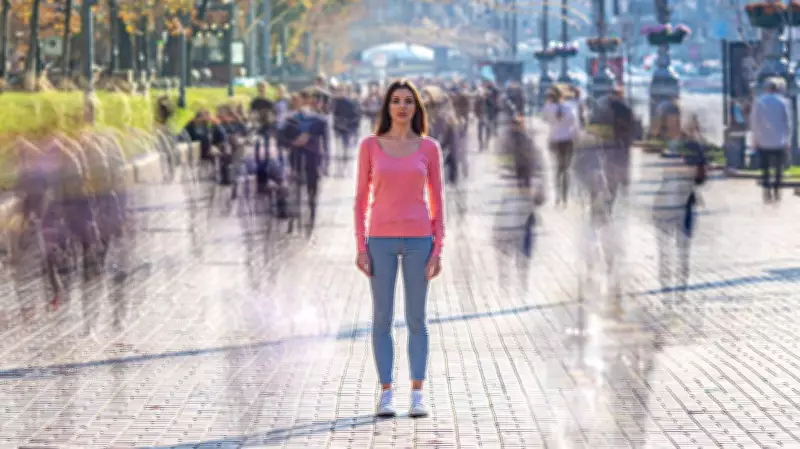
Parents began documenting their children's lives on social media starting in 2004, with baby milestones and kindergarten performances chronicled on Facebook and later Instagram. Security cameras captured their first steps into grocery stores. Today, these graduates and all Canadians can be photographed and recorded without consent or awareness by any of the more than 12 million CCTV cameras or 30 million smartphones active across the country.
The Digital Footprint Begins Early
Many members of this generation encountered computers and cellphones before entering grade school, quickly adopting smart watches and social media platforms. These convenient devices immediately began collecting data and constructing comprehensive profiles—sometimes anonymized, sometimes not—for marketing and other commercial purposes.

Even within the supposed sanctuary of home, smart refrigerators monitored family eating patterns while smart televisions in living rooms 'watched' residents, tracking and cataloguing viewing habits. Today, voice assistants like Alexa listen continuously to household conversations.
When these new graduates apply for their first significant post-education employment, prospective employers will likely scrutinize everything from social media posts to search engine histories and even online gaming activity. Paradoxically, having no digital footprint at all might raise suspicions that an individual has something to conceal.
'Being digitally connected does mean participating in systems that collect data, and I don't think it's realistic to pretend otherwise,' says Vaughn Kelly of Shareworthy PR in Calgary. 'At the same time, I don't think the solution is disengagement so much as intentional engagement.'
Public Concern Amidst Technological Embrace
Despite widespread adoption of social media platforms and sharing applications, many Canadians express significant privacy concerns. A November 2025 Angus Reid Institute survey revealed that even most technology optimists worry about the 'serious risk' artificial intelligence poses to personal privacy. A 2024-25 survey for the Privacy Commissioner of Canada found 89 percent of Canadians are at least somewhat concerned about privacy protection, with 36 percent expressing extreme concern.
Leger polling in August 2025 regarding AI usage discovered 83 percent of respondents have privacy worries. Multiple Pew Research Center studies in the United States found that over 50 percent of teenage app users avoid downloading certain applications due to privacy concerns, while 59 percent of teenage girls have disabled location-tracking features.
Younger demographics aged 18 to 29 demonstrate greater concern about their online profiles than older generations as they become more aware of oversharing dangers. Many young people feel they lack control over how their data gets collected. A University of California, Berkeley study found more than 88 percent of people between 18 and 22 believe there should be laws requiring websites to delete all stored information about them.
The Privacy Paradox in Modern Society
Society faces a profound contradiction: individuals happily share photos of special dinners or TikTok videos from dance floors while simultaneously worrying that this information might be used in unintended ways. This tension between public and private selves creates what experts call the privacy paradox.
Canadian federal politicians struggle with balancing public safety demands against citizen privacy protection. Current debates involve border control and policing powers that some argue would excessively intrude into personal lives.

Platform Vulnerabilities and Data Exploitation
Governments represent only part of the privacy equation. Social media platforms with seemingly innocent functions often possess darker dimensions. Facebook, with over three billion users globally, has faced repeated violations for surreptitiously collecting data through quiz applications, allowing third-party apps to access nearly all user personal data, and sharing user information with advertisers.
Parental habits of photographing children in front of homes with visible addresses and other identifying markers during family vacations have made social media platforms treasure troves for cyber criminals.
Even Snapchat, popular with Generation Z and Millennials and once considered offering privacy through 'disappearing' messages and photos, has proven vulnerable to sophisticated hackers. TikTok has collected sensitive data about its nearly 200 million North American users even when they don't share or save content, potentially exposing users to cyber attacks.
Game applications like Candy Crush and dating apps such as Tinder have also become fertile ground for harvesting user location and other personal data. Cloud storage systems holding everything from grocery lists to sensitive health records face constant hacking threats.
Surveillance Technologies and Privacy Erosion
More than a decade after Edward Snowden revealed secret information-gathering programs by the U.S. National Security Agency, society cannot complete a 24-hour news cycle without encountering new scandals about technological invasions of private lives.
A telling incident occurred in Kingston, Ontario, in May 2025 when a driver spotted a drone hovering outside her vehicle at a red light. After photographing the drone, she received a distracted driving ticket that was eventually dropped. This example illustrates the lengths both governments and corporations will pursue to gather information about individuals.
With daily privacy transgressions arriving like blasts from fire hoses, technology experts acknowledge that society in 2026 faces a full-blown privacy crisis. Tom Keenan, a professor at the University of Calgary's School of Architecture, Planning and Landscape, has monitored intrusive technologies for decades, teaching Canada's first computer security course in 1976 and publishing 'Technocreep: The Surrender of Privacy and the Capitalization of Intimacy' in 2014.
'The danger is there's nowhere to hide anymore,' Keenan warns. 'If you really want to protect your privacy, it's just going to be a lot of work.'
Historical Context and Modern Manifestations
While privacy concerns have evolved significantly, the fundamental human desire for boundaries conflicts with another aspect of human nature: the need for connection. This represents the flip side of what legal scholars Samuel D. Warren and Louis Brandeis termed 'the right to be let alone' in their seminal 1890 Harvard Law Review essay.
Late 20th-century television programs like The Oprah Winfrey Show and Dr. Phil capitalized on voyeuristic tendencies, while internet expansion created platforms for countless bloggers and Instagrammers to share personal narratives. This confessional nature demonstrates what scholar Sarah Igo calls 'an old and deep human urge to tell one's own story' despite daily warnings about privacy violations.
Artificial Intelligence and Emerging Threats
Current privacy threats have reached unprecedented levels through artificial intelligence, sophisticated facial recognition technology, and daily headlines about privacy violations. Elon Musk's Grok AI recently introduced video and image creation functions in 'spicy mode,' flooding the internet with non-consensual deepfake sexual imagery of women and children.
Major technology companies like Meta continue making news for privacy infringements, while TikTok under new ownership sparked outrage after expanding the types of location data it collects from users.
Government Legislation and Privacy Protection
Canadian legislation attempts to address privacy concerns but faces criticism from various quarters. Bill C-2, the government's initial attempt at stronger border security legislation in 2025, granted government and border officials broad powers to search devices, collect data, and even open citizen mail without warrants. A coalition of civil rights groups, academics, and legal experts quickly denounced it as 'a multi-pronged assault on basic rights and freedoms.'
Bill C-12, which passed the House of Commons in December, removed some sweeping powers, but the government continues considering narrower legislation with additional search authorities for police and intelligence agencies.
Meanwhile, governments increasingly invoke privacy to withhold information that citizens are entitled to know, creating what investigative journalist Dean Beeby calls 'Fortress Privacy.' This paradoxical situation sees privacy protections sometimes endangering public safety rather than protecting it.
Regulatory Landscape and Future Challenges
Canada lacks a single regulatory authority dedicated to governing data protection laws, though it maintains a federal privacy commissioner's office that provides information, advice, and conducts investigations. Each province and territory has its own privacy commissioner or ombudsman, with some implementing private personal information acts.
According to expert Christopher Deitzel, affiliate associate professor at Concordia University, there are few consequences for the worst privacy violators. 'Some people are feeling very stuck right now,' Deitzel observes, noting that most technology companies involved in privacy violations are based in the United States, where regulatory interest appears limited.
Deitzel describes Canada's approach to citizen privacy protection as 'piecemeal' and expresses concern about technology companies reducing staff dedicated to monitoring privacy and safety risks. 'We've tried a few times to have an online harms bill passed,' he notes. 'We really don't have a national strategy.'
Strategies for Personal Privacy Protection
Despite the challenging landscape, individuals can adopt strategies to better guard their privacy. Keenan recommends being 'info stingy' and questioning why information is being requested. 'When the government or your bank asks you for information, they're probably entitled to it. But your grocery store isn't,' he advises.
Many users employ 'finstas'—fake Instagram identities that allow sharing content without revealing true identities. Countless celebrities, including Kim Kardashian, have acknowledged maintaining such accounts.
For digital natives like Vaughn Kelly, technology offers both risks and opportunities. 'When social media is used with intention, it can be a way to connect without compromising personal boundaries,' she suggests.
As surveillance technologies advance and data collection becomes increasingly pervasive, Canadians face difficult choices about how much privacy they're willing to surrender for convenience, connection, and security in the digital age.