Ancient Sea Monster Styxosaurus Reanimated Through Advanced 3D Technology
In a groundbreaking fusion of science and technology, researchers have digitally resurrected a formidable ancient sea creature, the Styxosaurus, using state-of-the-art 3D modeling techniques. This 30-foot marine reptile, which roamed the oceans millions of years ago, has been brought back to life in a stunning virtual reconstruction that offers unprecedented insights into its anatomy and behavior.
Bringing Prehistory into the Digital Age
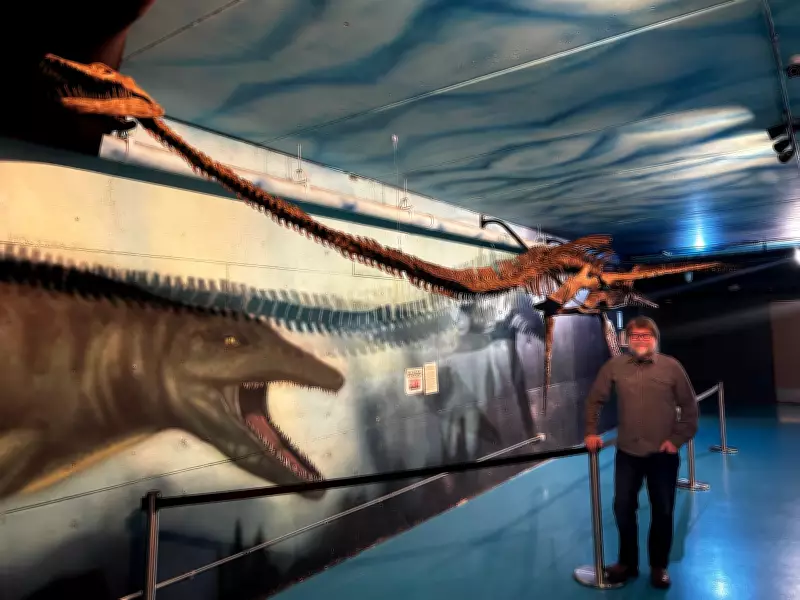
The project, led by a dedicated team of paleontologists and digital artists, involved meticulous scanning of fossilized remains to create an accurate 3D model of the Styxosaurus. This plesiosaur, known for its long neck and paddle-like limbs, once dominated marine ecosystems during the Late Cretaceous period. The digital resurrection allows scientists to study its movement patterns, feeding habits, and ecological role in ways that were previously impossible with static fossils alone.
Gerry Peters, a key figure in the initiative, recently showcased the impressive 30-foot model, highlighting how this technology bridges the gap between ancient history and modern innovation. "This isn't just about creating a visual spectacle; it's a tool for education and research," Peters explained. "By animating these creatures, we can test hypotheses about their biomechanics and environment."

Technological Breakthroughs in Paleontology
The use of 3D technology in paleontology represents a significant leap forward, enabling detailed analyses that go beyond traditional methods. Through high-resolution scans and computer simulations, researchers can reconstruct muscle structures, estimate swimming speeds, and even simulate interactions with other marine species. This approach has transformed the field, making it more accessible to the public and fostering a deeper appreciation for Earth's prehistoric past.
The project underscores the growing role of digital tools in scientific discovery, with applications extending to museums, educational programs, and virtual reality experiences. By making these ancient creatures tangible in a digital space, it sparks curiosity and engagement across all age groups.
Implications for Science and Education
This digital resurrection of the Styxosaurus is more than a technical achievement; it serves as a powerful educational resource. Schools and institutions can utilize the 3D models to teach students about evolution, marine biology, and the importance of preserving fossil records. Additionally, it opens new avenues for collaborative research, allowing scientists worldwide to access and study these models remotely.
The initiative also highlights the importance of interdisciplinary collaboration, combining expertise from geology, biology, and computer science. As technology continues to evolve, similar projects could resurrect other extinct species, providing a clearer picture of life on Earth through the ages.
In summary, the reanimation of the Styxosaurus through 3D technology marks a pivotal moment in paleontology, blending ancient wonders with modern innovation to enrich our understanding of the natural world.