AI Now Drives 83 Percent of Breaches as Attackers Outpace Defenders
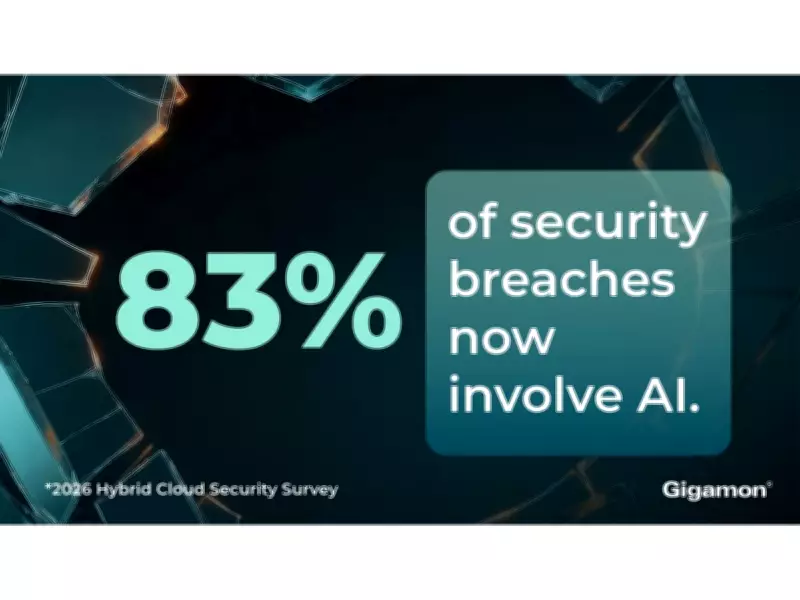
A new survey from Gigamon, a leader in deep observability, reveals a fundamental shift in the cyber threat landscape. According to the 2026 Hybrid Cloud Security Survey, artificial intelligence is now involved in 83 percent of reported security breaches, enabling attackers to operate with greater speed and scale than many organizations can defend against.
Despite expanded investments in security tools and governance policies, 65 percent of organizations experienced a breach in the past year. This represents an increase of 40 percent over the past three years. The findings highlight a growing imbalance as adversaries leverage AI to accelerate cyber attacks, while defenders are constrained by fragmented visibility into network activity.
Key Findings: AI Reshapes Both Offense and Defense
The annual study, now in its fourth year, surveyed more than 1,000 global Security and IT leaders across Australia, France, Germany, Singapore, the UK, and the US. The survey report, titled Reality Check: Exposing the AI Security Illusion, explores the disconnect between confidence and reality, revealing a critical blind spot in how organizations assess AI-driven risk.

Confidence vs. Capability: Nearly two-thirds (64 percent) of organizations believe their ability to secure new AI technologies is defined or integrated, yet 65 percent experienced a breach in the past year, and one in three experienced multiple breaches.
AI on Both Sides: AI is now embedded across security operations, with 94 percent reporting it autonomously initiates security functions without human interaction, most commonly in alert triage and prioritization (53 percent). At the same time, AI security incidents span multiple risk categories, including external AI attacks (41 percent), internal leaks (30 percent), unsanctioned use of AI (30 percent), and direct attacks on LLM systems (33 percent).
Trust in Cloud AI Eroding: As risk increases, data strategies are shifting. Most leaders (72 percent) now believe data lakes are more secure for AI workloads, compared with 70 percent that say they are reluctant to deploy AI in public cloud environments, up from 54 percent the previous year.
Quantum Computing Risk Accelerates Timeline: Looking ahead, 87 percent fear harvest now, decrypt later attacks, putting today's encrypted data at future risk and underscoring the longer-term implications of current visibility gaps.
Industry Response
Shane Buckley, President and CEO at Gigamon, stated: AI is embedded in nearly every stage of the attack chain, enabling adversaries to outpace detection and response. While 93 percent of organizations are investing in new security tools, many still lack visibility into how data moves across their environments, creating confidence without control. Closing this gap requires deep observability, giving security teams the clarity needed to detect threats earlier and respond with precision.
The survey underscores a critical need for organizations to reassess their security strategies and invest in deep observability to counter the growing AI-driven threat landscape.