Montreal-based technology firm HPQ Silicon Inc. has declared 2025 a pivotal year, marked by a decisive shift from broad research and development to a focused strategy aimed at commercializing its core technologies. The company, which trades on the TSX Venture Exchange under the symbol HPQ, released a year-end update highlighting significant technical progress and a clear roadmap toward generating revenue.
From R&D to Commercial Intent
Bernard Tourillon, Chairman, President, and CEO of HPQ Silicon, stated that the past year was defined by moving the company toward "focused commercial intent." He emphasized the challenge and necessity of balancing aggressive value creation with the technical integrity that has been a hallmark of the company. This strategic realignment involved concentrating resources on platforms with strong market relevance and scalable economics, setting the stage for near-term commercialization.
Fumed Silica Reactor Achieves Key Milestones
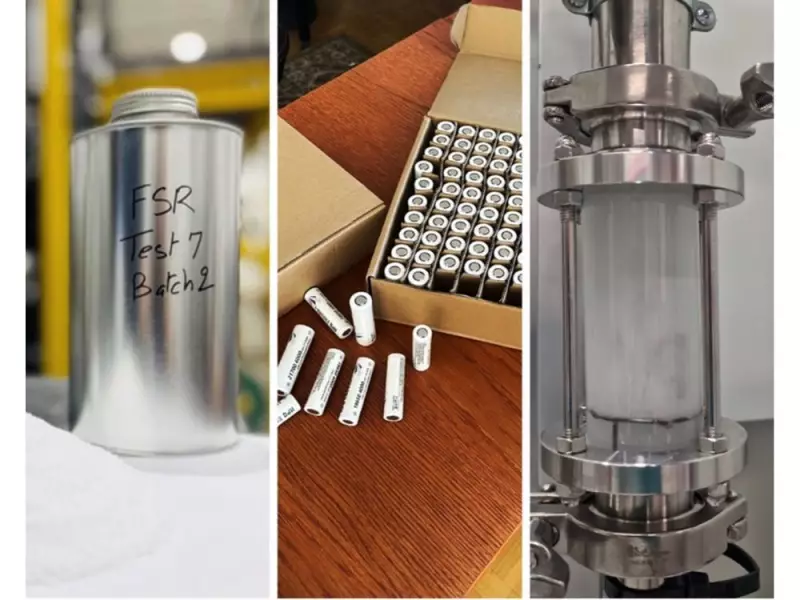
One of HPQ's most advanced platforms, the Fumed Silica Reactor (FSR), developed in partnership with PyroGenesis through HPQ Silica Polvere Inc., saw substantial progress in 2025. The project advanced from pilot commissioning to meaningful industrial validation, achieving several critical technical benchmarks.

The company successfully produced fumed silica at pilot scale and received independent confirmation that its material is morphologically equivalent to commercial-grade fumed silica. Furthermore, the material achieved commercial-grade surface areas as assessed under standard BET testing protocols. HPQ also made progress toward optimizing the system for semi-continuous operation and higher throughput.
These results validate HPQ's core proposition: that its plasma-based process can manufacture fumed silica in a single, streamlined step. This method is presented as a lower-energy, lower-carbon alternative to the complex, multi-step, and capital-intensive legacy manufacturing processes traditionally used in the industry.
Positioning for a Growing Market
With the technical performance of the FSR now demonstrated at scale, CEO Tourillon noted that the conversation has evolved. The focus is no longer on whether the technology works, but on how rapidly it can be deployed into the market. HPQ believes its timing is advantageous, as global demand for fumed silica continues to expand. Key growth drivers include applications in advanced battery materials, other specialty materials, energy systems, and the rapidly growing infrastructure supporting data centers and artificial intelligence.
The company's year-end update positions 2025 as a foundational year, where strategic focus and technical validation have created a tangible path forward. For HPQ Silicon, the coming period will be defined by execution and the translation of its validated technology platforms into commercial success.