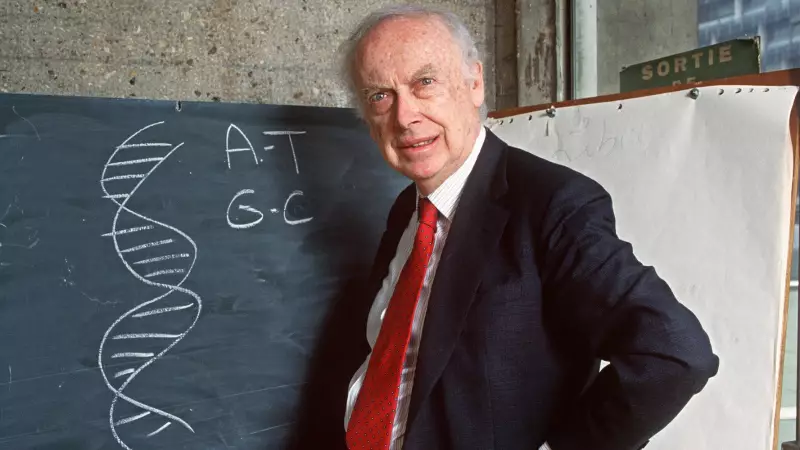
The scientific world has lost one of its most brilliant and controversial figures. James D. Watson, the American biologist who helped unravel the structure of DNA, paving the way for modern genetics, has died at the age of 97. His passing was confirmed by his former research institution, Cold Spring Harbor Laboratory.
The Discovery That Changed Everything
In 1953, a 24-year-old Watson, working with Francis Crick and Maurice Wilkins, made one of the most significant scientific breakthroughs of the 20th century. They determined that deoxyribonucleic acid, or DNA, exists as a double helix—a structure resembling a long, gently twisting ladder. This revelation immediately suggested how genetic information is stored and passed on when cells divide, a process that begins with the two strands of DNA pulling apart like a zipper.
For this monumental achievement, Watson, Crick, and Wilkins were jointly awarded the Nobel Prize in Physiology or Medicine in 1962. The double helix quickly became an iconic symbol of science, appearing everywhere from the artwork of Salvador Dali to postage stamps.

A Legacy of Innovation and Controversy
Watson's discovery ignited a revolution across medicine, crime investigation, and genealogy. It laid the foundation for gene therapy, genetic engineering, DNA fingerprinting, and the monumental Human Genome Project, which Watson helped guide. He once remarked, "Francis Crick and I made the discovery of the century, that was pretty clear," later adding they could not have foreseen its explosive impact on society.
However, his storied career was later overshadowed by reprehensible remarks. In 2007, he faced international condemnation after telling a British publication that he was "inherently gloomy about the prospect of Africa" due to beliefs about intelligence differences between races. This led to his suspension and subsequent retirement as chancellor of the Cold Spring Harbor Laboratory, where he had held leadership roles for nearly four decades.
In 2019, he reiterated these views in a television documentary, prompting the lab to revoke his honorary titles, stating his comments were "reprehensible" and "unsupported by science." Dr. Francis Collins, director of the National Institutes of Health, lamented that Watson's "views on society and humanity could not have matched his brilliant scientific insights."
A Complicated Scientific Giant
James Watson leaves behind a complex legacy. He was a hallowed figure in science for decades, a bestselling author, and an influential policy shaper. Yet, his later years were defined by professional censure. His life serves as a powerful reminder of the profound ethical responsibilities that accompany scientific discovery and the lasting impact of both monumental achievements and deeply hurtful words.