Groundbreaking Discovery in Interstellar Space Points to Life's Chemical Beginnings
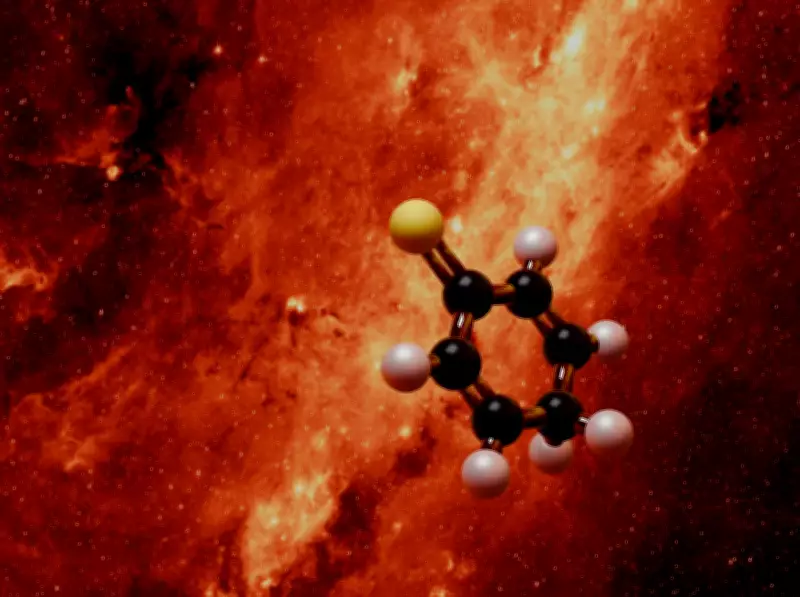
In a significant astronomical breakthrough, researchers have detected a complex 13-atom molecule containing sulfur in the vast expanse of interstellar space. This marks the first time this particular molecular structure has been observed outside Earth's atmosphere, offering compelling new evidence about the chemical precursors that may have contributed to the emergence of life.
A Sulfur-Containing Molecular Milestone
The discovery centers on a molecule composed of thirteen atoms, with sulfur playing a crucial role in its composition. Sulfur is a fundamental element in biological processes on Earth, making its presence in this interstellar compound particularly noteworthy for scientists studying astrobiology and chemical evolution.
This finding represents more than just another space molecule catalogued by astronomers – it provides tangible data about the types of complex organic compounds that exist in the cosmic environment where stars and planetary systems form. The detection was made possible through advanced spectroscopic analysis of light from distant regions of space, revealing the molecule's unique chemical signature.

Implications for Understanding Life's Cosmic Origins
The presence of such molecules in interstellar clouds suggests that the basic chemical ingredients for life may be more widespread throughout the universe than previously understood. These molecular building blocks could potentially seed developing planetary systems with prebiotic compounds, setting the stage for biological evolution under the right conditions.
Researchers emphasize that this discovery doesn't prove extraterrestrial life exists, but rather demonstrates that the chemical complexity necessary for life's emergence exists in the space between stars. The sulfur component is especially significant since sulfur plays vital roles in many biological molecules, including certain amino acids and coenzymes essential to terrestrial life.
Advancing Our Understanding of Cosmic Chemistry
This discovery contributes to a growing body of evidence that interstellar space serves as a cosmic laboratory where complex chemistry occurs naturally. Previous research has identified various organic molecules in space, but this particular sulfur-bearing compound adds a new dimension to our understanding of molecular diversity in the universe.
The research team utilized data from space-based observatories and sophisticated computer modeling to confirm the molecule's structure and composition. Their findings have been documented in peer-reviewed astronomical journals, with further analysis ongoing to understand how such molecules form and survive in the harsh conditions of interstellar space.
As astronomers continue to probe the chemical makeup of our galaxy, discoveries like this sulfur-containing molecule bring us closer to answering fundamental questions about how life might emerge from non-living matter, both on Earth and potentially elsewhere in the cosmos.