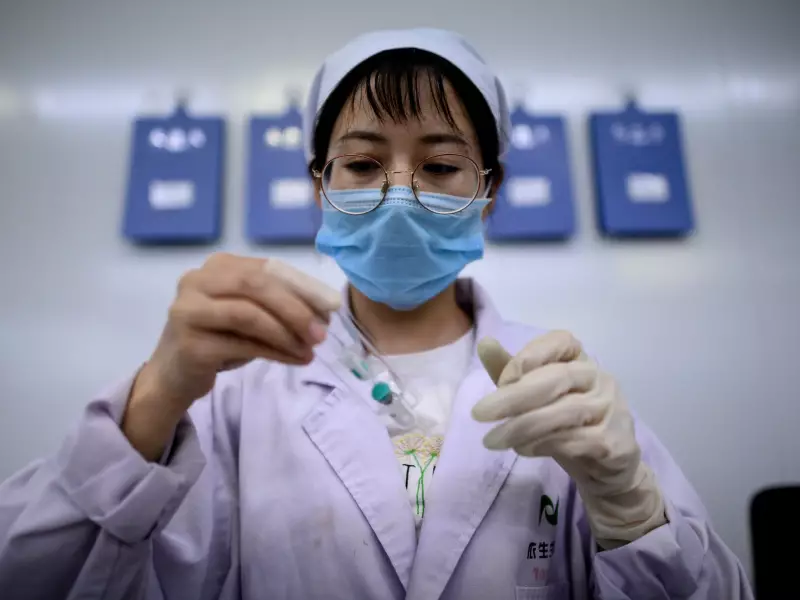
In an industrial zone on the outskirts of Shanghai, a new chapter in global pharmaceutical manufacturing is being written. Here, engineers are putting the final touches on a state-of-the-art production facility for BiBo Pharma, where massive stainless-steel vats—each capable of producing 50,000 litres of biologic medicine—stand ready. This rapid construction, which began in February and is already ahead of schedule, is a potent symbol of a broader transformation. China's biopharma sector is booming, evolving from its historical role as a low-cost contract manufacturer into a formidable source of its own drug discovery and intellectual property.
The Engine of China's Biopharma Acceleration
The momentum behind this shift is undeniable. The industry is riding a wave of record investment and a flurry of strategic partnerships that are drawing the world's largest drugmakers to its doorstep. A landmark example occurred in June, when British-Swedish giant AstraZeneca signed a deal potentially worth up to US$5.2 billion with Chinese firm CSPC Pharmaceuticals. This kind of dealmaking highlights a global search for promising new molecules, with many western pharmaceutical pipelines in need of replenishment.
This represents a dramatic turnaround from just five years ago, when the sector faced criticism for its perceived lag during the Covid-19 pandemic. Today, the narrative has flipped. Industry insiders and investors now privately caution that Western companies risk ceding their long-held lead in drug innovation to China. The core of China's competitive edge lies in its unparalleled speed and efficiency, which are making drug development not only faster but significantly more cost-effective.

A Built-In Advantage: Talent, Scale, and Government Support
This advantage is built on a foundation of a vast, highly skilled workforce. From PhD researchers and precision equipment manufacturers to the technicians assembling production lines, China has cultivated deep talent pools. While some experts were trained at U.S. universities or within major global pharma groups, a growing majority are homegrown engineers and scientists. This human capital, combined with a large patient population eager for new treatments, creates a powerful ecosystem.
Consultancy McKinsey quantifies this edge. Its analysis shows Chinese drugmakers can advance a target molecule into a drug candidate and into early-stage clinical trials two to three times faster than the global average. Once a therapy moves to human testing, patient enrolment in China occurs two to five times faster, depending on the disease area, thanks to immense patient pools with unmet medical needs.
Local government support, as seen with the Lingang district authorities facilitating BiBo Pharma's rapid approvals, further fuels this velocity. Peng Jiao, founder and CEO of BiBo Pharma, notes that China's strengths are particularly pronounced in developing novel medicines where the foundational science is established, but intricate engineering is required. "This is more like a puzzle, which requires an engineering rather than a scientific mindset," Jiao explains. "For this kind of work, you need a highly efficient team that moves very quickly to figure out which way is going to work."
Implications for the Global Pharmaceutical Order
The rise of China's biopharma sector signals a fundamental shift in the global innovation landscape. It is no longer just the world's factory for generic drugs but is becoming a primary engine for new, proprietary therapies. The combination of aggressive investment, streamlined regulatory processes, and massive scale presents a formidable challenge to traditional hubs in North America and Europe.
As companies like BiBo Pharma scale up production and more multinationals like AstraZeneca place billion-dollar bets on Chinese innovation, the question is no longer if China will produce a global blockbuster drug, but when. The race for the next generation of medicines is intensifying, and China has firmly established itself as a frontrunner.