Toronto's Waabi Forges Strategic Alliance with Uber, Targeting Vast AI-Driven Mobility Market
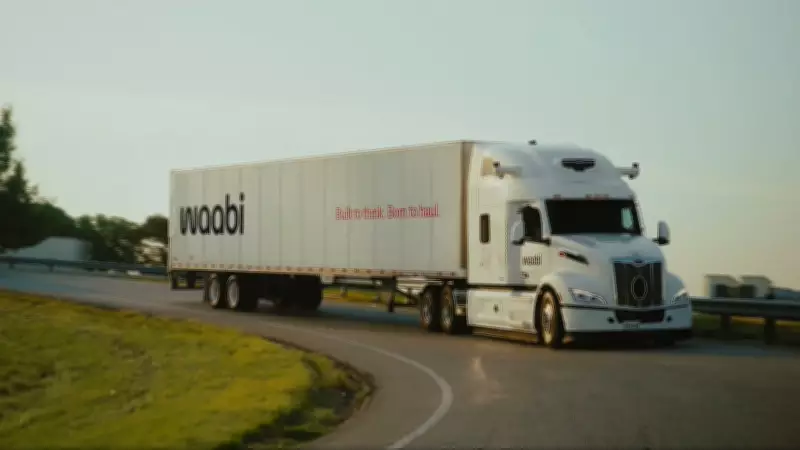
In a landmark development for Canada's technology landscape, Toronto-based artificial intelligence company Waabi has announced a pivotal partnership with global ride-hailing giant Uber. This collaboration underscores Waabi's emergence as a formidable player in the autonomous vehicle sector, a domain projected to burgeon into a colossal market worth approximately US$1 trillion. The deal, finalized in late January 2026, signals a significant vote of confidence in Waabi's innovative AI solutions designed for self-driving trucks and robotaxis.
CEO Raquel Urtasun Highlights Company's Vision and Technological Edge
Raquel Urtasun, the founder and chief executive officer of Waabi, recently elaborated on the company's trajectory and technological advancements during an interview with BNN Bloomberg. Urtasun, a renowned figure in AI and machine learning, emphasized that this partnership with Uber is a strategic milestone that will accelerate the deployment of Waabi's cutting-edge autonomous systems. "Our focus has always been on developing robust, scalable AI that can safely navigate complex real-world environments," Urtasun stated. "This alliance enables us to integrate our technology with Uber's extensive mobility network, bringing us closer to revolutionizing transportation."
Analyzing the Implications for the Autonomous Vehicle Industry
The autonomous vehicle market is experiencing rapid growth, driven by advancements in artificial intelligence, sensor technology, and regulatory frameworks. Waabi's specialization in AI for self-driving vehicles places it at the forefront of this transformative industry. The partnership with Uber not only provides Waabi with a powerful platform for real-world testing and data collection but also enhances its credibility and market reach. This move is expected to foster increased investment and innovation within Canada's tech ecosystem, particularly in Ontario, where AI research and development are thriving.

Industry analysts note that such collaborations are crucial for overcoming technical and regulatory hurdles associated with autonomous driving. By leveraging Uber's operational expertise and vast user base, Waabi can refine its algorithms and accelerate the path to commercialization. "This deal exemplifies how strategic partnerships can bridge the gap between AI research and practical application," commented a technology sector observer. "It positions Waabi to compete effectively against other global leaders in the autonomous vehicle space."
Broader Context and Future Prospects
This development occurs amidst a dynamic period for artificial intelligence and transportation technology in Canada. As cities like Toronto continue to cultivate a vibrant tech hub, successes like Waabi's underscore the potential for homegrown companies to achieve international prominence. The autonomous vehicle sector, encompassing both freight and passenger transport, is poised for substantial expansion, with AI playing a central role in enabling safer, more efficient mobility solutions.
Looking ahead, Waabi's partnership with Uber is likely to spur further advancements and potentially attract additional collaborations or investments. The company's progress will be closely monitored as it navigates the challenges of scaling its technology and meeting rigorous safety standards. For the Canadian economy, such achievements highlight the importance of supporting innovation and fostering environments where high-tech enterprises can flourish.
In summary, Waabi's strategic deal with Uber marks a significant step forward for the Toronto-based firm, solidifying its status as a leader in the AI-driven autonomous vehicle industry. With the market projected to reach unprecedented value, this partnership sets the stage for transformative changes in how goods and people are transported, reinforcing Canada's position on the global technology stage.