Microsoft's Vaughan Data Center: Powering AI While Navigating Community Relations
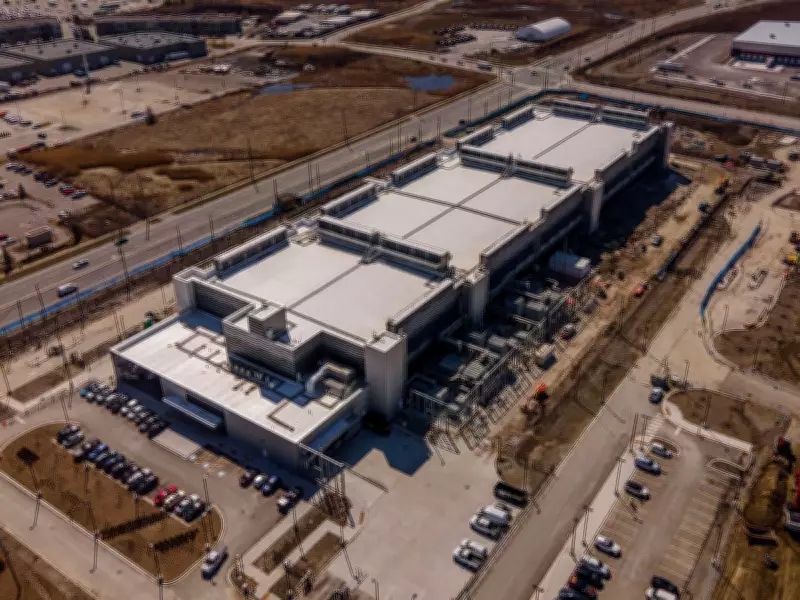
In Vaughan, Ontario, Microsoft Corporation is constructing a data center facility that spans nearly the size of fifteen hockey rinks. During a recent tour, company executives emphasized that this massive infrastructure project will require only about half an Olympic swimming pool's worth of water annually to operate its cooling systems.
The Cooling Technology Behind the Operation
Ed Pomerleau, Microsoft's vice-president of data center operations for the Americas, demonstrated how sophisticated software controls rows of dampers along the walls. These automated systems open and close to precisely regulate airflow and maintain optimal temperatures within the facility. Fan wall units arranged in comprehensive grids further manage the cooling processes essential for the thousands of supercomputers housed within.
The Growing Demand for AI Infrastructure
Data centers like Microsoft's Vaughan facility host extensive arrays of supercomputers that perform complex calculations. As artificial intelligence adoption accelerates globally, these centers face increasing demand. However, this growth comes with significant environmental considerations that have sparked controversy within communities hosting such facilities.

Critics point to the substantial pressure data centers place on electrical grids and their considerable water consumption. According to England-based risk consultant Verisk Maplecroft, an average mid-sized data center can utilize approximately 1.4 million liters of water daily for cooling infrastructure. The International Energy Agency notes that such facilities can rapidly consume over 100 megawatts of electricity—equivalent to the annual power needs of 100,000 households.
Microsoft's Canadian Investment and Commitments
Microsoft has committed to investing $19 billion in Canada to expand its data center presence in Ontario and Quebec. The Vaughan location, designated YTO 11, is projected to become fully operational during the second half of this year. Pomerleau assured that these developments will not increase electricity prices for Canadian consumers or negatively impact local water supplies.
"We wouldn't build a data center where the utility provider couldn't sustain the demand," Pomerleau stated during an April press conference following the facility tour. "We invest in supporting infrastructure as well, including transformer plants and other necessary components."
The Distinction Between Training and Inference
Microsoft Canada president Matt Milton clarified that the company's Canadian data centers differ from the "large gigawatt centers" frequently discussed in industry conversations. The Vaughan facility will consume "dramatically lower" energy since it won't train AI models but will instead run everyday AI services using already-trained systems—a process known as "inference" within the technology sector.
Expert Perspectives on Energy Consumption
Ebrahim Bagheri, a University of Toronto professor specializing in AI research, contends that whether a data center focuses on training or inference matters less than the overall electricity demand placed on the grid. While inference requires less electricity than training processes, Bagheri notes that inference occurs at a vastly greater scale.
"If you process a billion prompts daily, you're looking at energy consumption in the range above 50 gigawatts," Bagheri explained. "By comparison, training a frontier AI model over three to four months typically requires approximately 20 to 30 gigawatts."
The Microsoft data center in Vaughan represents a microcosm of the broader challenge facing technology companies: how to meet the soaring computational needs of artificial intelligence while maintaining responsible relationships with host communities and minimizing environmental impacts. As AI continues to transform industries and daily life, the balance between technological advancement and sustainable practices will remain a critical consideration for corporations and communities alike.