Robert Evans Ford would not have such an opportunity today. But 70 years ago, his skill, speed, expertise and extensive vocabulary made him valuable to the Alberta justice system and its courts. He could take shorthand as fast as the most voluble orator, regardless of the elegance or simplicity of the language.
A Family Sustained by Two Fountain Pens
From Calgary to Edmonton to Red Deer, my father's two fountain pens raised a family. He was a court reporter at a time when it was a job mostly featuring men. He and his colleagues would sit through trials or any judicial matter, writing in elegant shorthand exactly what was said as it was uttered. Later, he would transcribe the proceedings onto a Dictaphone and hand it to a stenographer to type up. The transcripts would promptly be made available to the lawyers and court officials.
Now, the job that once supported a wife and three children is being replaced by a machine. No surprise in 2026, but such cost-cutting measures contain a warning to the entire judicial apparatus.

The Perils of Machine Transcription
How? Here's an analogy especially appropriate for those of a certain age: Turn on a radio station featuring rap music. Listen to an example and then write down the exact words spoken/sung/expressed. Tough, isn't it, to guarantee that what you heard is what was said? That's the difference between recorded sounds and the human voice speaking. In a pinch, the listener can ask the speaker to repeat the statement. Can't do that with a recording. Can't ask a machine to clarify a statement.
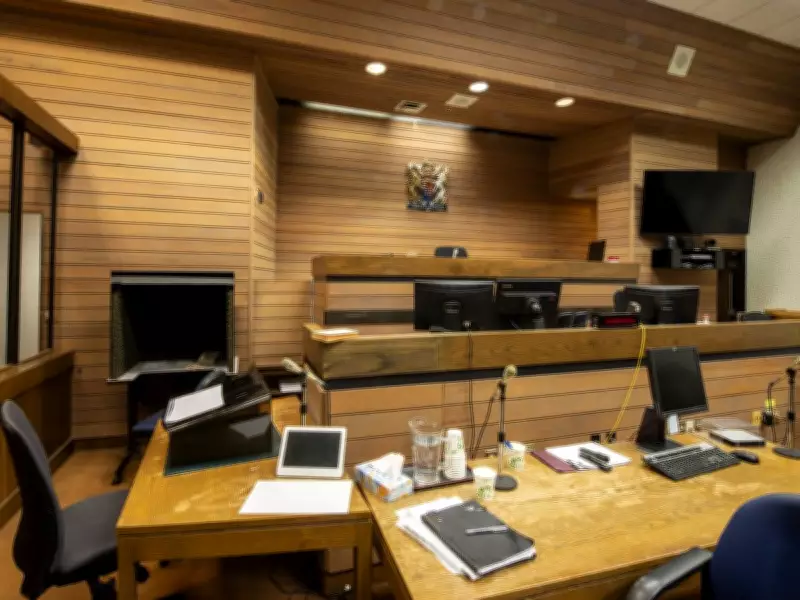
The move to replace court reporters with machinery is a done deal for the Court of King's Bench as of the end of June. It is purported to save money spent on human reporters in favour of a one-time purchase of a recording device.
Cue the satisfied rubbing together of defence lawyers' hands. (Sarcasm alert.) Any glitch, any mumbled or indistinct utterance, can and likely will be used by whichever side of a case the confusion will benefit.
It's good to remember this court is the Superior Court for the province, hearing criminal and civil cases.
AI and Accuracy: A Troubling Combination
It is curious that some of the same people who worry about artificial intelligence being wrong would believe that a recording of trial proceedings would be accurate at all times.
Could there be a more serious need for accuracy than the testimony of witnesses made in court proceedings? We are assured that access to justice will remain unaffected. Cue a snort of disbelief.
Call me skeptical, but what people say and what is heard can be opposed. And when it involves a machine, how is the mistake caught?
It's not like this is a new problem. All of us have encountered it: The misunderstanding that occurs when an unfamiliar accent meets an uncomprehending ear. No machinery is programmed to ask a witness to repeat a sentence so it can be copied accurately. Only a person can do that, and the person responsible for ensuring the accuracy of court proceedings will no longer be seated below the judge, taking down all the conversation accurately.
A Cautionary Tale
Another case to prove the point: a text message from a fast-talking relative who did not bother to reread the message before sending it off. She referred to someone having a 'Regina' attack — capitalization courtesy of the cellphone — instead of an angina attack.
Yes, it was funny; definitely not serious. I mean, what would a Regina attack entail? A mob of angry Saskatchewan residents storming the legislature?
Such fun has no place in a courtroom. Mishearing and misunderstanding can be devastating.
That's what relying solely on technology can deliver.
Catherine Ford is a regular columnist.