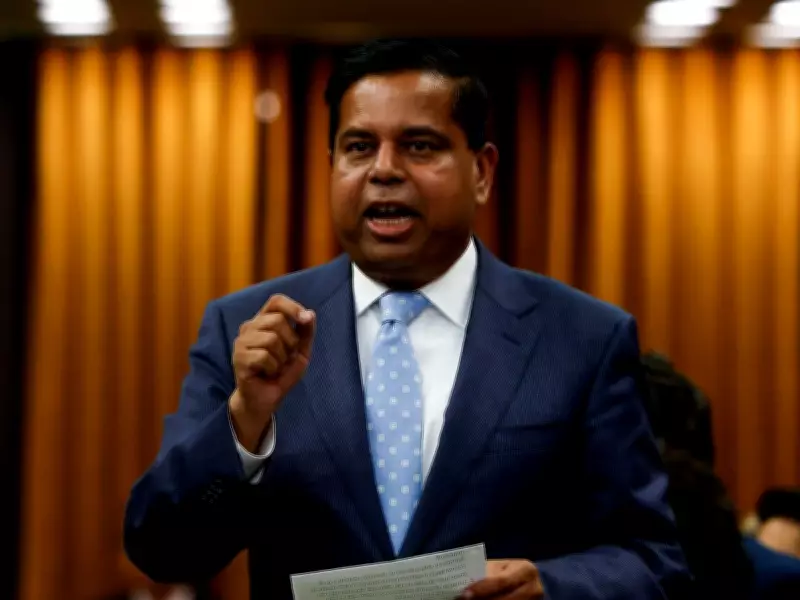
Canada's Public Safety Minister Gary Anandasangaree announced on Wednesday that the Liberal government will propose amendments to its contentious lawful access bill, Bill C-22, to better protect encryption and reduce the scope of data that companies must retain. The move comes after weeks of fierce criticism from privacy advocates, tech companies, and opposition parties.
Minister Defends Bill Amid Criticism
Speaking to reporters on Parliament Hill, Anandasangaree emphasized his commitment to passing the legislation, arguing that police and intelligence agencies urgently need updated tools to combat digital-era crimes such as extortion and child sexual abuse material. However, he acknowledged concerns that the bill did not explicitly prohibit the government from compelling companies to undermine their encryption systems.
"The encryption issue is one we will clarify, because this bill was never meant to breach encryption," Anandasangaree said. "We look forward to working with the opposition on appropriate language that we can live with."

Key Provisions of Bill C-22
Bill C-22 proposes a new regime requiring electronic service providers to create or maintain capabilities for police and intelligence agencies to receive or intercept private data, subject to a judicial warrant. Key elements include:
- Allowing police and the Canadian Security Intelligence Service (CSIS) to ask telecommunications companies whether an individual is a client before obtaining a warrant for further information.
- Requiring electronic service providers to organize and retain various types of client data for up to one year in a form accessible to law enforcement with a warrant.
- Mandating that providers store information such as device locations or camera data, which could be used to track a person's live location in national security or emergency situations.
Controversy Over Data Retention
The one-year metadata retention clause has drawn significant backlash, with privacy and security experts arguing it is excessively long and violates Canadians' right to privacy. Police services, however, had told MPs they would prefer the retention period to be extended to two or three years. Anandasangaree indicated the government is open to adjusting the duration.
"We are listening to the concerns and will propose changes to ensure the bill strikes the right balance between public safety and privacy," he said. The minister also criticized tech companies opposing the bill, urging them to do more to protect Canadians' privacy.
Parties had until Wednesday afternoon to submit amendment proposals. The bill is expected to undergo further debate in the House of Commons as the government seeks to build consensus.