Doomsday Clock Ticks Closer to Midnight Than Ever Before
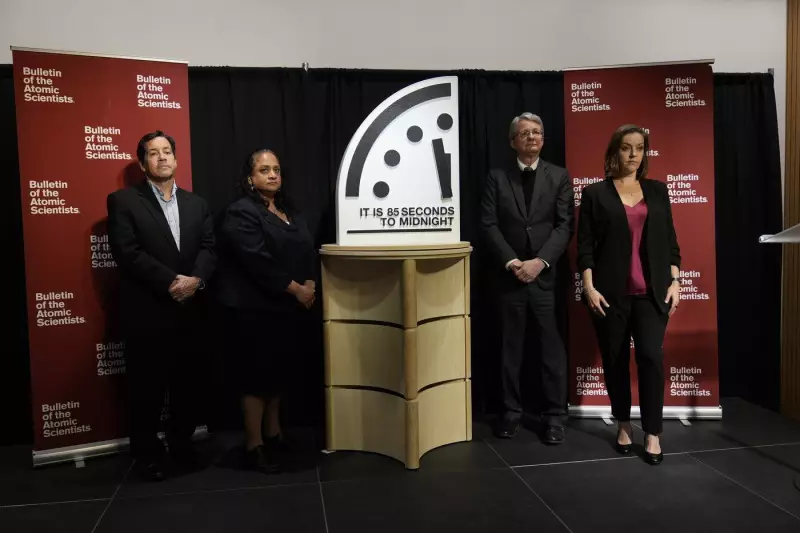
The symbolic Doomsday Clock, maintained by the Bulletin of the Atomic Scientists, has been set to 85 seconds to midnight, marking the closest it has ever been to representing global catastrophe. This adjustment was announced during a news conference at the Carnegie Endowment for International Peace in Washington, D.C., on January 23, 2026. The decision reflects growing concerns among scientists and experts about the world's trajectory toward potential disaster.
Factors Driving the Clock's Movement
The Bulletin's members, including Jon B. Wolfsthal, Asha M. George, Steve Fetter, and Alexandra Bell, cited multiple interconnected threats as reasons for moving the clock forward. Key factors include:
- Escalating nuclear tensions, particularly amid ongoing conflicts and arms proliferation.
- Climate change impacts, such as extreme weather events and insufficient global action.
- Disruptive technologies, including artificial intelligence and cyber warfare, which pose new risks to stability.
- Biological threats, like pandemics and bioterrorism, that continue to challenge public health systems.
This setting surpasses the previous record of 90 seconds to midnight, highlighting a worsening global security landscape. The clock, first created in 1947, serves as a metaphor for humanity's proximity to self-destruction, with midnight representing a global catastrophe.

Historical Context and Global Implications
Over the decades, the Doomsday Clock has fluctuated based on geopolitical events, from the Cold War to modern crises. The current adjustment underscores a sense of urgency among scientists, who warn that inaction could lead to irreversible consequences. In their statement, the Bulletin emphasized the need for international cooperation to address these threats, calling on world leaders to prioritize diplomacy, climate mitigation, and technological governance.
The announcement comes amid a backdrop of other global news, but the Doomsday Clock's message stands out as a stark reminder of the collective challenges facing humanity. As experts analyze this development, it serves as a call to action for policymakers and the public to work toward a safer, more sustainable future.