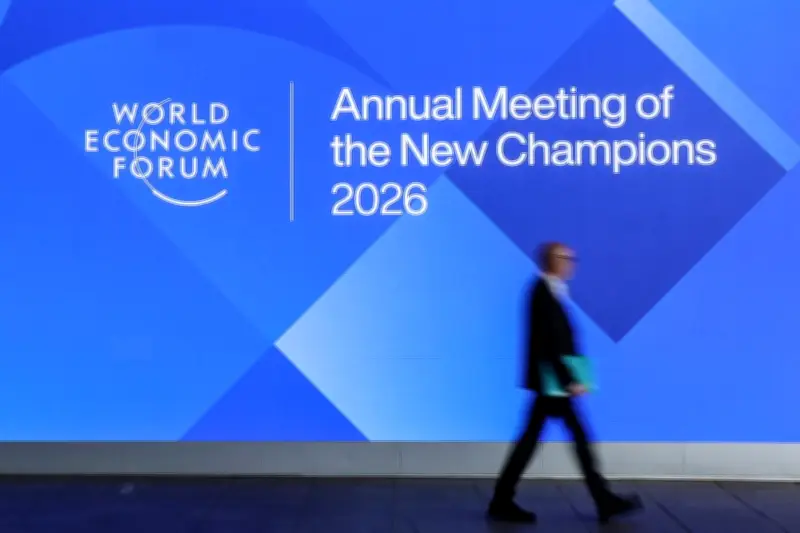
China's Premier Li Qiang declared on Tuesday that his country's rapid technological advancements represent an 'opportunity' for the global community, not a threat, during his address at the World Economic Forum's Annual Meeting of the New Champions in Dalian, China. The statement comes amid ongoing international concerns over China's growing influence in sectors such as artificial intelligence, telecommunications, and supercomputing.
Premier's Remarks at the New Champions Meeting
Speaking at the event, which gathers global leaders in business, government, and academia, Li emphasized that China's progress in technology is intended to foster collaboration and shared prosperity. 'China's development is an opportunity for the world, not a threat,' he said, according to state media reports. The premier highlighted China's commitment to open innovation and international cooperation, particularly in emerging fields like green technology and digital economy.
The Annual Meeting of the New Champions, often referred to as 'Summer Davos,' is a key platform for discussing global economic trends. This year's theme focuses on 'Next Frontiers for Growth,' with sessions on AI, climate tech, and supply chain resilience. Li's remarks were part of a broader effort to reassure foreign investors and partners amid trade tensions and technology export controls imposed by the United States and other nations.

Context of Global Tech Competition
China's technological rise has been a source of geopolitical friction, particularly with the U.S., which has restricted exports of advanced semiconductors and other technologies to Chinese firms. In response, China has accelerated its push for self-sufficiency in key areas. Just days before Li's speech, a Chinese supercomputer displaced U.S. machines as the world's fastest for the first time since 2017, according to the TOP500 list, underscoring the nation's computing prowess.
Li's 'opportunity not threat' narrative aligns with China's broader diplomatic messaging, seeking to position itself as a partner in global innovation rather than a rival. The premier also cited examples of Chinese companies collaborating internationally on renewable energy projects and digital infrastructure in developing nations.
Reactions and Implications
International observers noted that Li's comments were carefully calibrated to address concerns without directly confronting critics. 'The premier's speech signals a desire to de-escalate tech tensions and attract foreign investment,' said a trade analyst based in Beijing. However, some remain skeptical, pointing to China's state-led industrial policies and data security laws that create barriers for foreign firms.
The World Economic Forum's meeting in Dalian runs through Thursday, with additional sessions on climate action, healthcare innovation, and economic recovery. Li's participation underscores China's role as a host and key stakeholder in global economic governance.