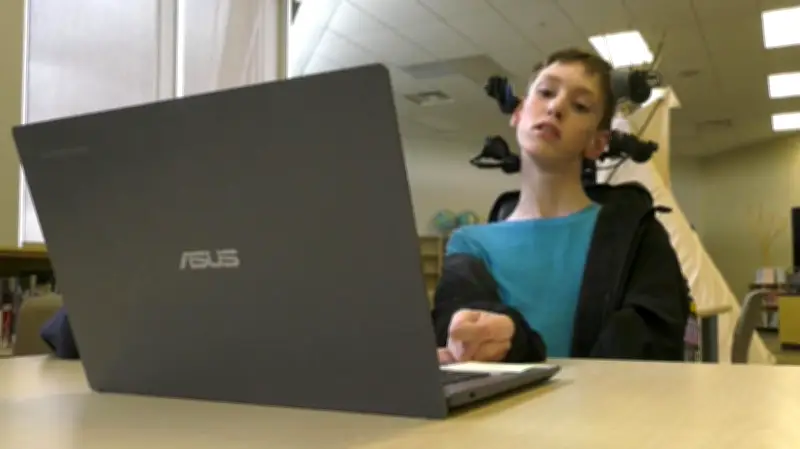
Learning has become significantly more accessible for Liam Dansereau, a teenager from Alberta living with cerebral palsy. He now utilizes artificial intelligence to operate his laptop using only his facial expressions, a task that previously posed considerable challenges.
AI-Powered Assistive Technology
The innovative system employs facial recognition software that tracks the user's movements and translates them into commands. For Dansereau, this means he can navigate his computer, type, and communicate more effectively than ever before.
Impact on Education
This technology has transformed Dansereau's educational experience, allowing him to participate more fully in classroom activities and complete assignments with greater independence. The system adapts to his specific needs, making it a personalized solution.

Broader Implications
Experts highlight that such assistive technologies are crucial for individuals with motor impairments, offering them new opportunities for learning, communication, and employment. The success of this approach in Alberta could inspire wider adoption across Canada and beyond.
As AI continues to evolve, its applications in assistive tech promise to break down barriers and empower people with disabilities, giving them greater control over their environment and their futures.