AMD Broadens AI Computing Horizons with Expanded Ryzen AI Portfolio
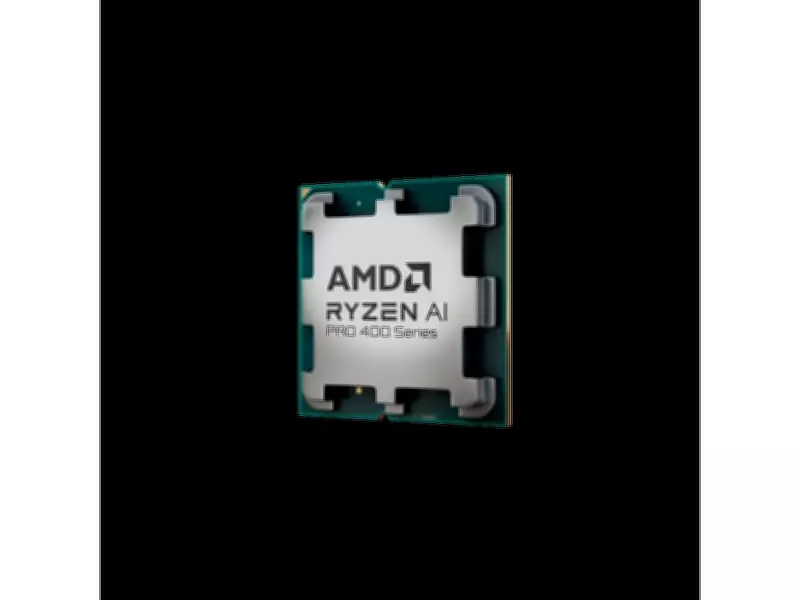
At Mobile World Congress 2026 in Barcelona, Spain, AMD unveiled a significant expansion of its artificial intelligence computing capabilities with the launch of the Ryzen AI 400 Series and Ryzen AI PRO 400 Series desktop processors. This strategic move positions AMD at the forefront of the rapidly evolving AI personal computer market, offering consumers and businesses unprecedented options for on-device AI acceleration.
World's First Copilot+ Desktop Processors
The newly announced Ryzen AI 400 Series processors represent a groundbreaking achievement in desktop computing technology. These processors are the world's first designed specifically to support Microsoft Copilot+ PC experiences on desktop platforms, marking a significant milestone in the evolution of personal computing from traditional tools to intelligent assistants.
Jack Huynh, senior vice president and general manager of the Computing and Graphics Group at AMD, emphasized the transformative nature of this development. "The desktop PC is evolving from a tool you use to an intelligent assistant that works alongside you," Huynh stated. "With the Ryzen AI 400 Series processors, we're bringing powerful AI acceleration that enables our partners to build systems that empower both enterprises and consumers to do more and create more."

Advanced Architecture for Modern Workloads
The Ryzen AI 400 Series desktop processor family combines multiple cutting-edge technologies to deliver exceptional performance across professional workloads. The architecture integrates high-performance "Zen 5" central processing unit cores with AMD RDNA 3.5 graphics and a dedicated AMD XDNA 2 neural processing unit. This sophisticated combination provides the responsiveness, efficiency, and local AI acceleration required by today's office professionals, developers, and power users.
Featuring a neural processing unit capable of delivering up to 50 TOPS of AI compute power, these processors enable users to run AI assistants and productivity tools locally on their PCs. This approach helps ensure sensitive data remains on the device while delivering greater control, enhanced performance, and improved privacy protection compared to cloud-based alternatives.
Comprehensive Enterprise and Consumer Solutions
AMD's expanded portfolio now offers the company's broadest set of enterprise PC solutions to date, backed by the AMD PRO platform. This comprehensive approach strengthens enterprise-class security, manageability, and resilience for large-scale AI PC deployments across organizations of all sizes.
Original equipment manufacturer partners have already begun announcing new AI PC offerings featuring enterprise-class notebooks and mobile workstations powered by Ryzen AI PRO 400 Series mobile processors. These developments enable OEMs to provide next-generation AI PCs across high-performance desktops, laptops, and mobile workstations optimized for modern computational demands.
Performance and Efficiency Advantages
The Ryzen AI 400 Series mobile processors demonstrate impressive performance capabilities, delivering up to 30% faster multithreaded performance compared to competitive processors. This substantial performance advantage helps professionals complete demanding workloads more efficiently while maintaining all-day battery life for uninterrupted productivity.
From everyday multitasking and collaboration to sophisticated software development, data analysis, and AI-assisted workflows, Ryzen AI 400 Series processors enable consistent performance and on-device intelligence across modern computing environments. The expanded portfolio now includes workstation configurations, further broadening the applications for these advanced processors in professional settings.
Transforming Desktop Computing Experiences
The introduction of these processors represents a fundamental shift in how users interact with desktop computers. By enabling powerful on-device AI acceleration and next-generation performance, AMD is empowering users to run artificial intelligence applications and large language models locally while tackling compute-intensive applications with unprecedented ease.

Design and engineering professionals, in particular, stand to benefit significantly from these advancements, as the processors provide the computational power needed for complex visualization, simulation, and creative tasks without compromising system responsiveness or user privacy.