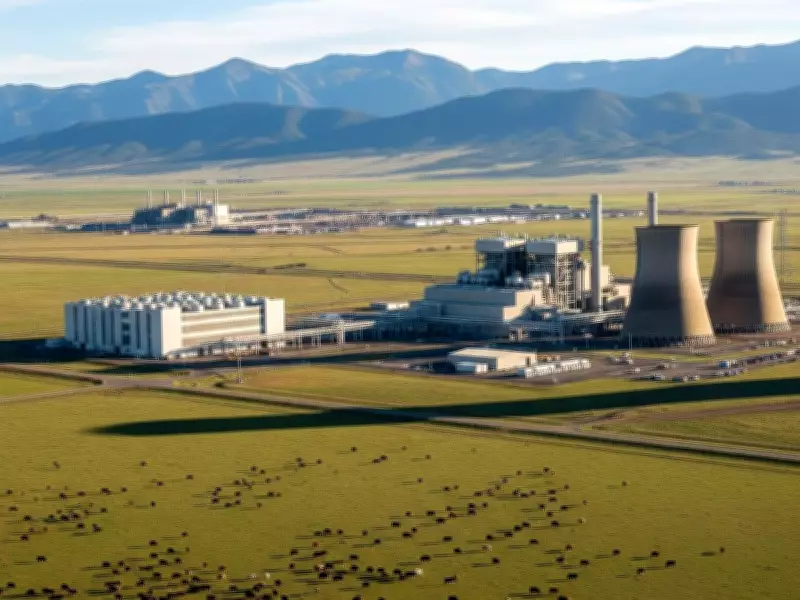
Alberta's Strategic BYOP Mandate for AI Data Centers
In a bold move to position itself as a North American leader in artificial intelligence infrastructure, the Alberta government has implemented a crucial policy requiring all proposed AI data centers to include their own power supply. This "Bring Your Own Power" (BYOP) strategy, introduced as part of the province's 2024 AI data center attraction plan, addresses the enormous energy demands of these facilities while protecting existing electrical infrastructure.
The Immense Power Requirements of AI Infrastructure
AI data centers represent massive technological complexes, often spanning areas larger than football fields, filled with extensive banks of computers that process global data streams. These facilities perform complex computational tasks ranging from internet search optimization and engineering design simulations to space station operations. The processing intensity generates substantial heat, requiring enormous volumes of water for cooling systems alongside vast quantities of electricity to power the servers handling intricate data exchanges.
Each individual AI data center can consume as much electrical power as a medium to large city, creating significant challenges for regional power grids. Following the announcement of Alberta's strategy to become a premier data center location, initial projections revealed startling statistics. If all twenty-plus proposed data center projects had been constructed simultaneously, their combined energy consumption would have reached approximately 16,000 megawatts.

Protecting Alberta's Electrical Grid Capacity
This projected consumption represents a substantial portion of Alberta's total electrical capacity. The provincial grid maintains a theoretical maximum capacity of 20,000 megawatts, with peak hour loads typically reaching about 12,000 megawatts. The potential addition of AI data centers would have consumed 80 percent of the grid's total capacity while using approximately one-third more power than all other provincial consumers combined.
For context, Alberta's entire oilsands operations collectively consume about 3,300 megawatts, with much of this power co-generated by the companies themselves. This self-sufficient energy model exemplifies the BYOP approach that the provincial government now mandates for AI data center developers.
Economic and Infrastructure Implications
The Alberta Electricity System Operator (AESO), the provincial electricity regulator, has issued warnings about the potential consequences if BYOP requirements are not strictly enforced. Without independent power generation by data centers, the increased electricity demand could create upward pressure on power prices for both residential consumers and industrial users throughout the province.
Despite the clear policy directive, implementation has shown some variability in early projects. The initial AI data centers attracted to Alberta have not consistently demonstrated complete BYOP compliance, with uncertainty surrounding whether two proposed facilities near Edmonton will establish independent power generation or connect to the existing provincial grid.
This strategic approach allows Alberta to capitalize on the growing AI computing sector while ensuring that the province's electrical infrastructure remains reliable and affordable for all users. By requiring data centers to develop their own power solutions, the government prevents potential grid overload situations that could compromise service for residential, commercial, and industrial consumers across the region.