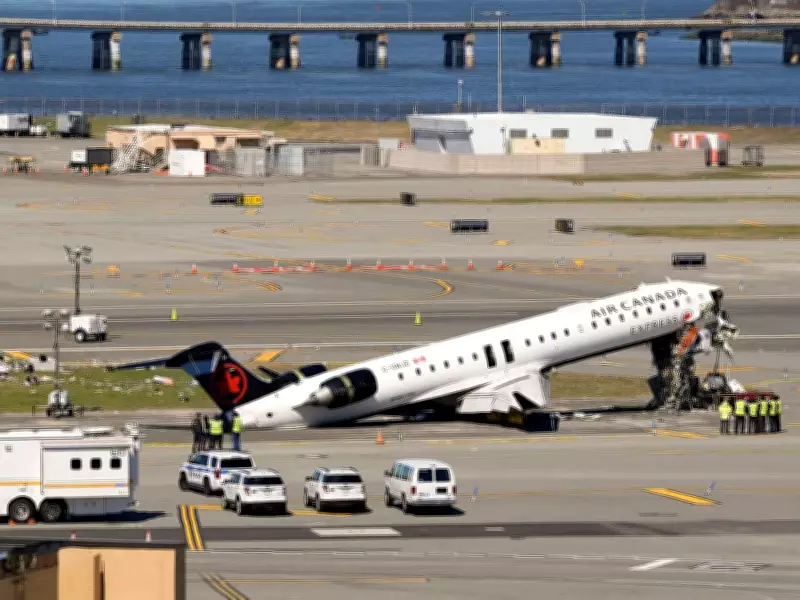
The recent fatal collision involving an Air Canada Express jet at New York's LaGuardia Airport has intensified discussions about implementing artificial intelligence in air traffic control towers worldwide. This incident, which occurred on March 22, 2026, resulted in the deaths of two pilots when their aircraft struck a Port Authority fire truck shortly after landing, highlighting critical vulnerabilities in current aviation safety systems.
Hong Kong's AI-Powered Control Tower Demonstration
At a simulated control tower adjacent to Hong Kong International Airport, aviation officials are showcasing how artificial intelligence could prevent similar tragedies. The demonstration features multi-panel screens displaying a virtual scenario where a passenger jet approaches landing while a ground vehicle unexpectedly enters the runway area.
Wesley Yung, chief air traffic control officer at Hong Kong's Civil Aviation Department, explains the system's capabilities: "Imagine how difficult it is for someone to spot a vehicle on the runway. You may not be able to see it, but the system will tell you: Don't land anyone there."

How the AI System Operates
The technology combines advanced software algorithms with hardware inputs including high-resolution cameras to monitor airport surfaces. When the system detects potential conflicts, it immediately identifies aircraft by flight number and tags ground vehicles, flashing warnings to human controllers well before trajectories intersect.
This real-time processing capability addresses what aviation experts identify as a key limitation of human controllers: the inability to simultaneously track multiple moving objects while managing other variables like weather conditions and controller fatigue.
Industry Under Pressure
The LaGuardia accident represents the third major commercial aviation incident in the United States within fifteen months, occurring against a backdrop of systemic challenges facing the global aviation industry. These include:
- A critical shortage of experienced air traffic controllers
- Insufficient numbers of trained airport ground staff
- Limited availability of qualified flight crews
- Manufacturing constraints preventing timely replacement of aging aircraft fleets
Compounding these issues, global passenger demand for air travel is projected to more than double by 2050, placing unprecedented strain on existing infrastructure and personnel.
Limitations and Human Factors
While promising, aviation officials caution that AI systems cannot completely eliminate accident risks. The technology isn't infallible—hardware can malfunction, and human controllers retain ultimate authority over landing and takeoff decisions. The neural network deployed in Hong Kong serves as an augmentation tool rather than a replacement for human judgment.
However, the system's primary advantage lies in its capacity to process enormous volumes of information that could overwhelm human operators during complex scenarios. This processing power becomes increasingly valuable as airport traffic density grows and operational environments become more complicated.
Broader Implications for Aviation Safety
The Air Canada Express collision has exposed fundamental shortcomings in an industry navigating multiple crises simultaneously. From pandemic recovery and supply chain disruptions to geopolitical conflicts affecting air routes, aviation faces compounding pressures that traditional approaches may not adequately address.
As investigations into the LaGuardia accident continue, the demonstration in Hong Kong provides tangible evidence of how emerging technologies might enhance safety protocols. The system's ability to identify and flag potential runway conflicts before they escalate offers a proactive approach to accident prevention that complements existing safety measures.
Aviation authorities worldwide are now closely examining whether similar AI implementations could strengthen air traffic management systems, particularly at busy airports where multiple variables converge to create complex operational environments. The technology represents not just an incremental improvement but potentially a paradigm shift in how air traffic is monitored and managed.