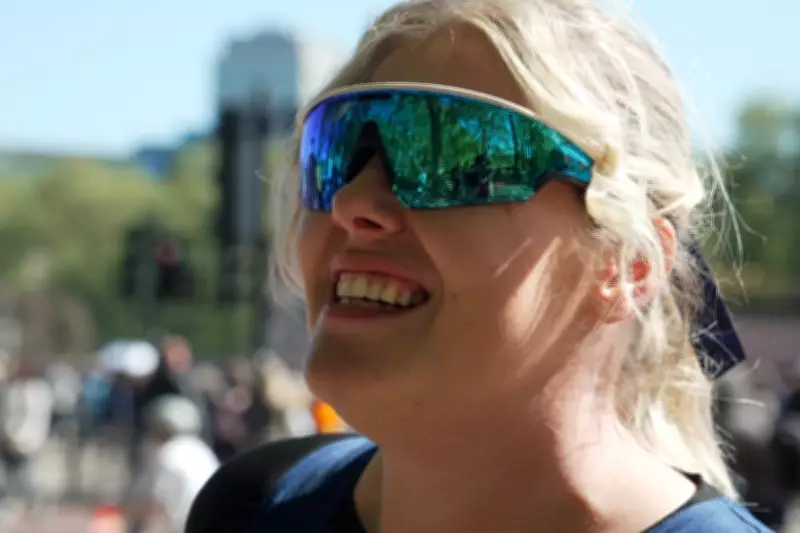
A groundbreaking innovation in assistive technology is set to transform the experience of visually impaired runners at the London Marathon. AI-powered smart glasses, developed by a team of engineers and accessibility experts, will provide real-time navigation cues and obstacle detection, enabling blind and partially sighted athletes to participate more independently.
How the Technology Works
The smart glasses use a combination of cameras, sensors, and artificial intelligence algorithms to interpret the surrounding environment. They can identify obstacles such as other runners, curbs, and traffic cones, and relay this information to the wearer through audio feedback. The system also provides turn-by-turn directions along the marathon route, ensuring runners stay on course.
Real-Time Communication
Unlike traditional guide runners, who must stay physically connected via a tether, the smart glasses allow for hands-free guidance. Runners can receive verbal instructions through bone conduction headphones, which transmit sound without blocking ambient noise. This feature is crucial for safety, as it allows athletes to hear traffic and other environmental sounds.

Impact on Runners
Early trials have shown promising results. Tilly Dowler, a visually impaired runner who tested the glasses during a training session in London, described the experience as liberating. "It gives me a sense of freedom that I haven't had before," she said. "I can focus on my pace and enjoy the race without constantly worrying about what's ahead."
Enhancing Independence
The technology is not intended to replace human guides entirely but to supplement them. For runners who cannot afford a guide or who prefer to run alone, the smart glasses offer an alternative. They also reduce the physical strain on guides, who must keep up with the athlete's pace while providing verbal cues.
Broader Applications
While the immediate focus is on the London Marathon, the developers envision broader uses for the smart glasses. Potential applications include everyday navigation for visually impaired individuals, assistance in crowded spaces like airports, and even support for those with other disabilities. The AI system can be trained to recognize specific objects or hazards, making it adaptable to various environments.
Future Developments
The team behind the glasses is already working on improvements, including longer battery life and more precise object recognition. They hope to make the technology affordable and widely available within the next few years. "Our goal is to level the playing field for visually impaired athletes and eventually for all visually impaired people," said the project lead.
Conclusion
As the London Marathon approaches, the buzz around AI smart glasses continues to grow. This innovation represents a significant step forward in assistive technology, offering new opportunities for visually impaired runners to compete with confidence. Whether it becomes a standard tool in marathons worldwide remains to be seen, but its potential is undeniable.