The political battle over artificial intelligence is rapidly escalating, positioning itself as a central fault line for the upcoming 2026 midterm elections in the United States. The disruptive technology is fracturing traditional coalitions within both major parties and even the tech industry itself, setting the stage for a costly ideological war.
The Three-Way Political Split Over AI's Future
Distinct camps are emerging in the debate, with members found across the political spectrum. The first is an accelerationist faction, closely allied with the White House, which argues that heavy regulation risks the U.S. losing a critical technological race with China. This view is championed by figures like David Sacks, the venture capitalist and podcast host serving as the White House’s AI czar. Sacks, an ally of Elon Musk, was the primary author of a legally contentious executive order signed by President Donald Trump in November 2025 that aims to block most state-level AI regulation.
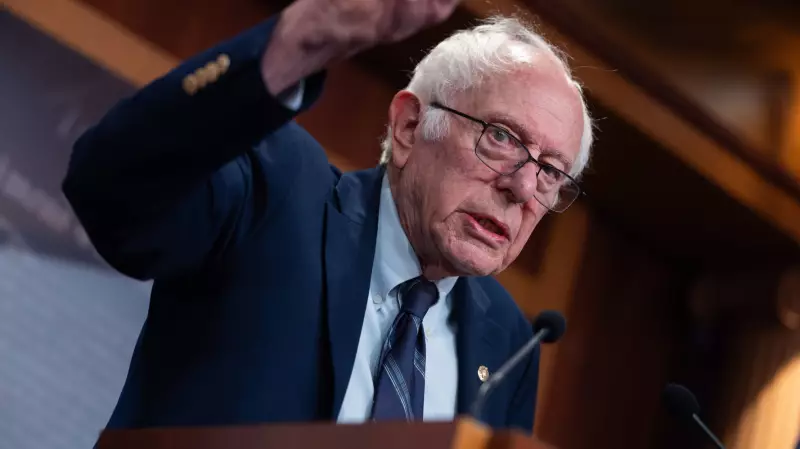
The second camp is a populist backlash, led by figures like Senator Bernie Sanders (I-Vt.). In a social media video on November 5, 2025, Sanders proposed a total moratorium on the construction of new data centers that power the AI boom, warning of mass job loss and increased isolation among youth. "We need all of our people involved in determining the future of AI, and not just a handful of multibillionaires," Sanders stated. While his proposal is unlikely to become law soon, it has become a rallying cry for progressives and others opposing AI infrastructure.

A third, more moderate group is enthusiastic about AI's potential but insists on proactive regulation to manage risks and help Americans adapt. A key figure here is New York Assemblyman Alex Bores, a Democratic congressional candidate. Bores, who helped pass New York's RAISE Act creating safety standards for advanced AI models, argues that sensible rules are necessary to prevent a broader populist revolt against the technology.
The Super PACs and the Money Behind the Battle
The ideological fight is being bankrolled by dueling super PACs threatening to spend hundreds of millions of dollars. On the pro-industry side, Leading The Future, backed by leaders from OpenAI and Andreessen Horowitz, plans to spend $100 million during the midterms to advance its vision of light-touch regulation. The group has already made Assemblyman Alex Bores its first declared target, attacking him with digital ads and increasing its planned spending against him from $1 million to $10 million.
Operatives in both parties privately acknowledge that Leading The Future's financial war chest could make it one of the three major outside forces in competitive primaries, alongside cryptocurrency and pro-Israel groups. The group has also endorsed candidates like Chris Gober, a Republican election lawyer running for a Texas congressional seat.
On the other side, AI companies and researchers favoring a regulatory approach have launched their own non-profits and super PACs, with plans to spend approximately $50 million on the 2026 elections.
Grassroots Anger and Political Risks
The debate is not confined to Washington. A grassroots backlash against data center construction is fueling local rebellions nationwide, from Arizona to Wisconsin and Virginia. Concerns over massive water and electricity consumption have made these facilities a flashpoint. This backlash proved politically potent in November 2025, helping Democrats flip a GOP-held state legislative seat in Virginia.
Candidates embracing the anti-data center stance, however, face significant political risks. Nathan Sage, a mechanic and Marine veteran running for the Democratic Senate nomination in Iowa with Sanders' support, has endorsed the moratorium. He argues that data centers bring long-term costs like pollution and higher energy prices for only short-term construction jobs. Yet, he and others like him risk facing a well-funded advertising blitz from industry-backed groups.
Opposition also alienates powerful allies like construction unions, which have become heavily reliant on data center projects for jobs in a stagnant economy. The executive director of the Wisconsin Building Trades Council recently defended the projects in an op-ed, calling them a "powerful catalyst for community growth."

Public Opinion and the Path Forward
Polling indicates a nuanced public view. Earlier in November 2025, a poll by the Democratic think tank Searchlight Institute found roughly two-thirds of Americans want the government to regulate AI for safety and privacy, even if it slows development compared to China. However, an outright ban is unpopular; by a 62% to 18% margin, Americans prefer regulation over banning research.
Alex Bores, at the center of the early skirmishes, warns that the industry's stance will shape the public's response. "If the industry’s voice ends up being dominated by this extreme minority from Leading the Future, then proposals like banning all data centers will gain more traction," he said. He advocates for a moderate, regulated approach to ensure the technology "benefits the many instead of the few." As the 2026 election cycle heats up, the fight over AI's role in society is poised to become one of its most expensive and divisive issues.