Iran Soccer Team Challenges Trump's World Cup Safety Remarks
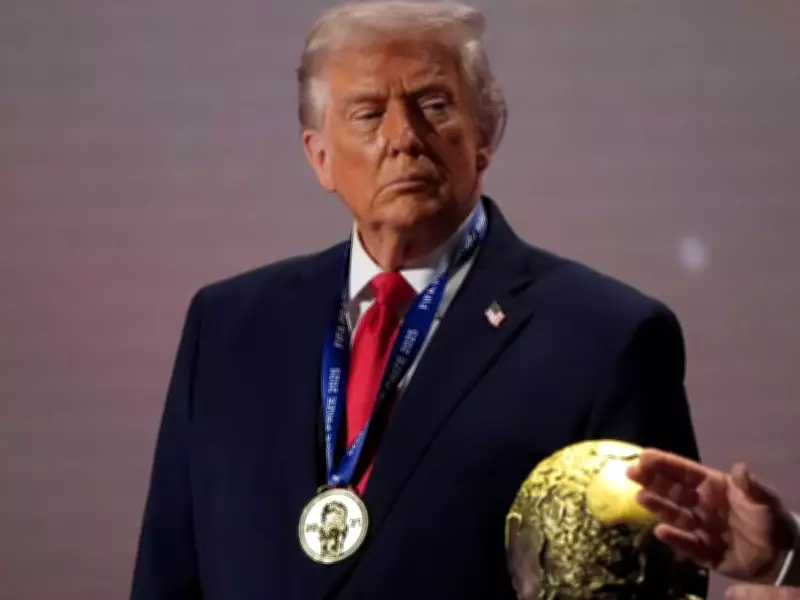
Iran's national soccer team has issued a sharp rebuke to former U.S. President Donald Trump following his comments questioning the squad's participation in the upcoming 2026 FIFA World Cup. Trump, who was awarded the FIFA Peace Prize last year, suggested it might not be "appropriate" for the Iranian team to compete due to potential safety risks.
Trump's Controversial Statement
On Thursday, Trump took to his Truth Social platform to express his concerns about the Iranian team's involvement in the tournament, which the United States is co-hosting alongside Canada and Mexico. "The Iran National Soccer Team is welcome to The World Cup, but I really don't believe it is appropriate that they be there, for their own life and safety," Trump wrote.
He emphasized that while the team was welcome, he had reservations about their participation given the current geopolitical tensions. This statement came just hours after FIFA President Gianni Infantino met with Trump at the White House to discuss tournament preparations and the "current situation with Iran."

Iran's Forceful Response
The Iranian team responded swiftly and forcefully through their official Instagram account, turning the security question back on the United States. "The World Cup is a historic and international event and its governing body is FIFA — not any individual, country," the team declared.
They continued with a pointed critique: "Certainly no one can exclude Iran's national team from the World Cup; the only country that can be excluded is one that merely carries the title of 'host' yet lacks the ability to provide security for the teams participating in this global event."
The Iranian squad highlighted their qualification achievements, noting they were among the first teams to secure their spot in the tournament through "a series of decisive victories achieved by the brave sons of Iran."
Broader Political Context
The exchange occurs against a backdrop of heightened tensions between the two nations. Iranian Sports Minister Ahmad Donyamali announced earlier this week that Iran would not participate in the World Cup following the killing of Supreme Leader Ayatollah Ali Khamenei in strikes carried out by the United States and Israel on February 28.
"Considering that this corrupt regime (the U.S.) has assassinated our leader, under no circumstances can we participate in the World Cup," Donyamali stated during an appearance on Iranian state television.
This announcement came despite Iran having been drawn into Group G alongside Belgium, New Zealand, and Egypt, with matches scheduled for Los Angeles and Seattle.
Trump's Subsequent Comments
Following Iran's response, Trump returned to Truth Social to promote the tournament's success while defending American capabilities. "The United States of America looks very much forward to hosting the FIFA World Cup," he wrote. "Ticket sales are 'through the roof!'"
He added confidently: "It will be the Greatest and Safest Sporting Event in American History. All Players, Officials, and Fans will be treated like the 'STARS' that they are!"
This isn't the first time Trump has commented on Iran's potential participation. Last week, he told Politico that he "really doesn't care" if Iran plays, describing the country as "very badly defeated" and "running on fumes."
FIFA's Position and Tournament Details
FIFA President Infantino emphasized the unifying power of soccer in his statement following the White House meeting. "We all need an event like the FIFA World Cup to bring people together now more than ever," Infantino posted on Instagram alongside a photo of the World Cup trophy outside the White House.
The 2026 World Cup is scheduled to begin on June 11, marking the first time the tournament will be hosted across three nations. Iran had secured their qualification early in the process, demonstrating their competitive strength in international soccer.
This diplomatic exchange highlights how international sports events increasingly intersect with global politics, creating complex situations where athletic competition becomes entangled with geopolitical tensions and security concerns.