In a significant development involving Iran's national soccer program, a fifth team member has officially withdrawn an application for asylum in Australia. This decision follows recent chaotic scenes where protesters obstructed the Iranian women's soccer team's attempted departure from a hotel on Australia's Gold Coast.
Asylum Bid Withdrawn Amid Ongoing Team Turmoil
The player's choice to abandon the asylum process marks the latest chapter in a series of defections and political tensions surrounding Iranian athletes competing internationally. While specific details regarding the individual's identity or motivations remain undisclosed, this withdrawal underscores the complex pressures facing players who contemplate seeking refuge abroad.
Gold Coast Hotel Incident Highlights Political Tensions
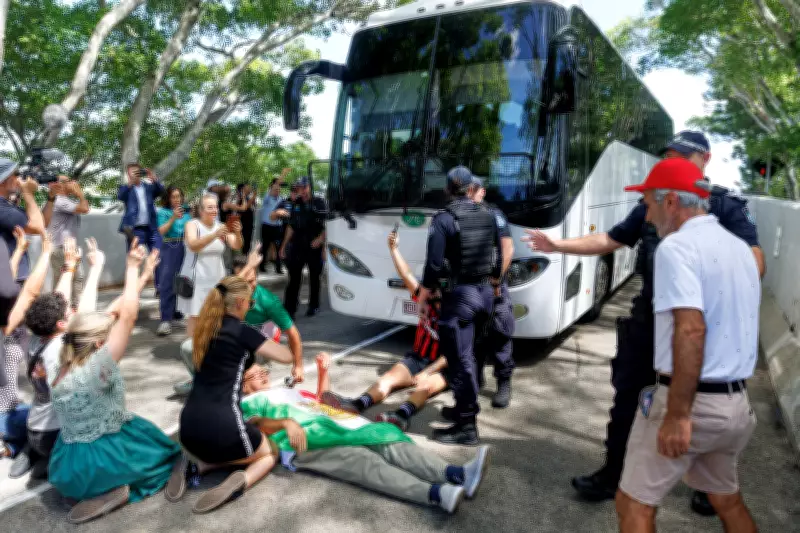
Earlier this month, on March 10, 2026, demonstrators blocked a bus believed to be transporting the Iranian women's national soccer team as it tried to leave a hotel on the Gold Coast. The protest, captured in images distributed by The Associated Press, illustrates the volatile political climate that often shadows Iranian sports delegations overseas.

Such incidents are not isolated. Iranian athletes, particularly women, have frequently found themselves at the intersection of sports and geopolitics, with some opting to seek asylum citing fears of persecution upon returning home. The withdrawal of this fifth asylum application suggests a shifting dynamic, though whether due to personal reassessment, external pressure, or changed circumstances is unclear.
Broader Context of Iranian Athletes and Asylum
Over recent years, numerous Iranian athletes across various sports have sought asylum in countries like Australia, Europe, and North America, citing political repression, lack of freedoms, or personal safety concerns. Soccer, as the nation's most popular sport, often sees its players become focal points in these narratives.
The decision by this fifth team member to step back from the asylum process may influence others contemplating similar moves. It also raises questions about the support systems—or lack thereof—available to athletes navigating these high-stakes decisions far from home.
Impact on Team Dynamics and Future Competitions
While the immediate focus is on the individual's choice, the cumulative effect of multiple asylum bids and public protests can disrupt team cohesion and preparation. The Iranian women's team, already facing the challenge of competing on a global stage, must now also manage these external political pressures.
Australian authorities have not commented extensively on the case, maintaining a focus on standard immigration protocols. However, the situation highlights the broader role host countries play when international sporting events become arenas for political expression and personal refuge.
As the story develops, observers will watch for any further withdrawals or new asylum applications from the team, as well as the Iranian government's response to these continued defection threats. The intersection of sports, politics, and human rights remains a contentious and evolving space for all involved.